 Back to main website
Nov 2025
Building Trusting Relationships
We know that working with some families can be difficult, particularly when there is a high occurence of adverse childhood experiences, trauma and abuse. The WSCP have put together a short guide to help you in your practise when working with children and families in difficult situations so that you can build trusting relationships and work effectively with multi-stressed families.
This page provides clear, practical guidance to help practitioners feel confident, informed, and supported.
All content on this page is based on materials developed through multi‑agency learning and workshop insights.
Raising practitioner confidence
This page aims to help practitioners:
- Build confidence when navigating challenging conversations.
- Understand the behaviours they may encounter and how to respond.
- Strengthen professional curiosity and questioning.
- Reduce anxiety when confronted with conflict, challenge, or resistance.
- Feel more prepared when working with families whose engagement may be inconsistent, resistant, or complex.
Building Trust and Rapport
Foundation for all relational practice
Building trust with families is central to effective safeguarding. Many families come into contact with services feeling judged, misunderstood, or powerless. Strong rapport helps reduce defensiveness and enables collaborative working.
Key principles include:
- Using empowering, inclusive language.
- Sharing control through choice and transparency.
- Being honest, consistent, and predictable.
- Acknowledging emotions early to prevent escalation.
- Humanising professional relationships without judgement.

What is the underlying cause?
Understanding power struggles and root factors
Challenging behaviours rarely occur without reason. It is important to avoid assumptions and occurs across all socioeconomic backgrounds.
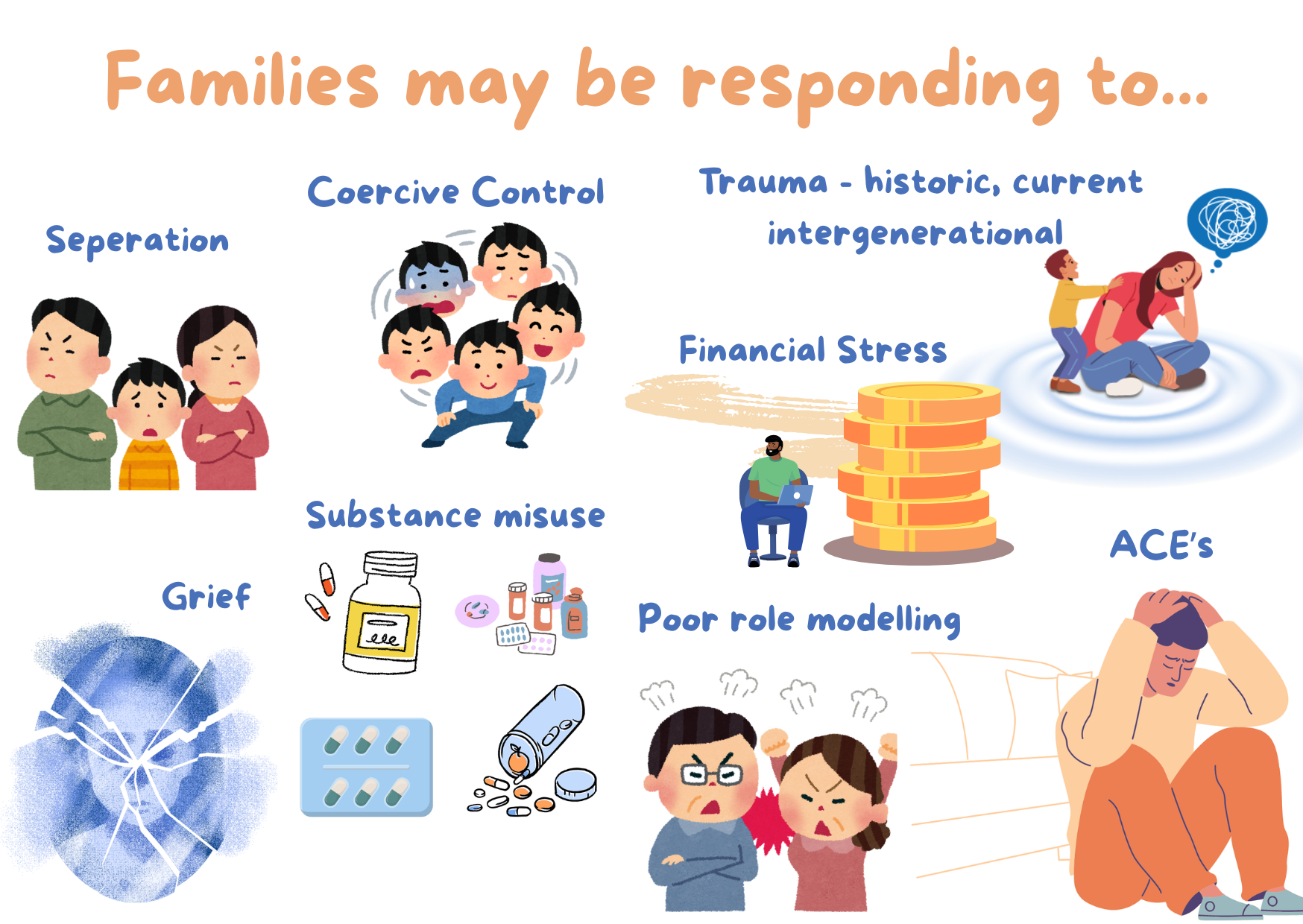
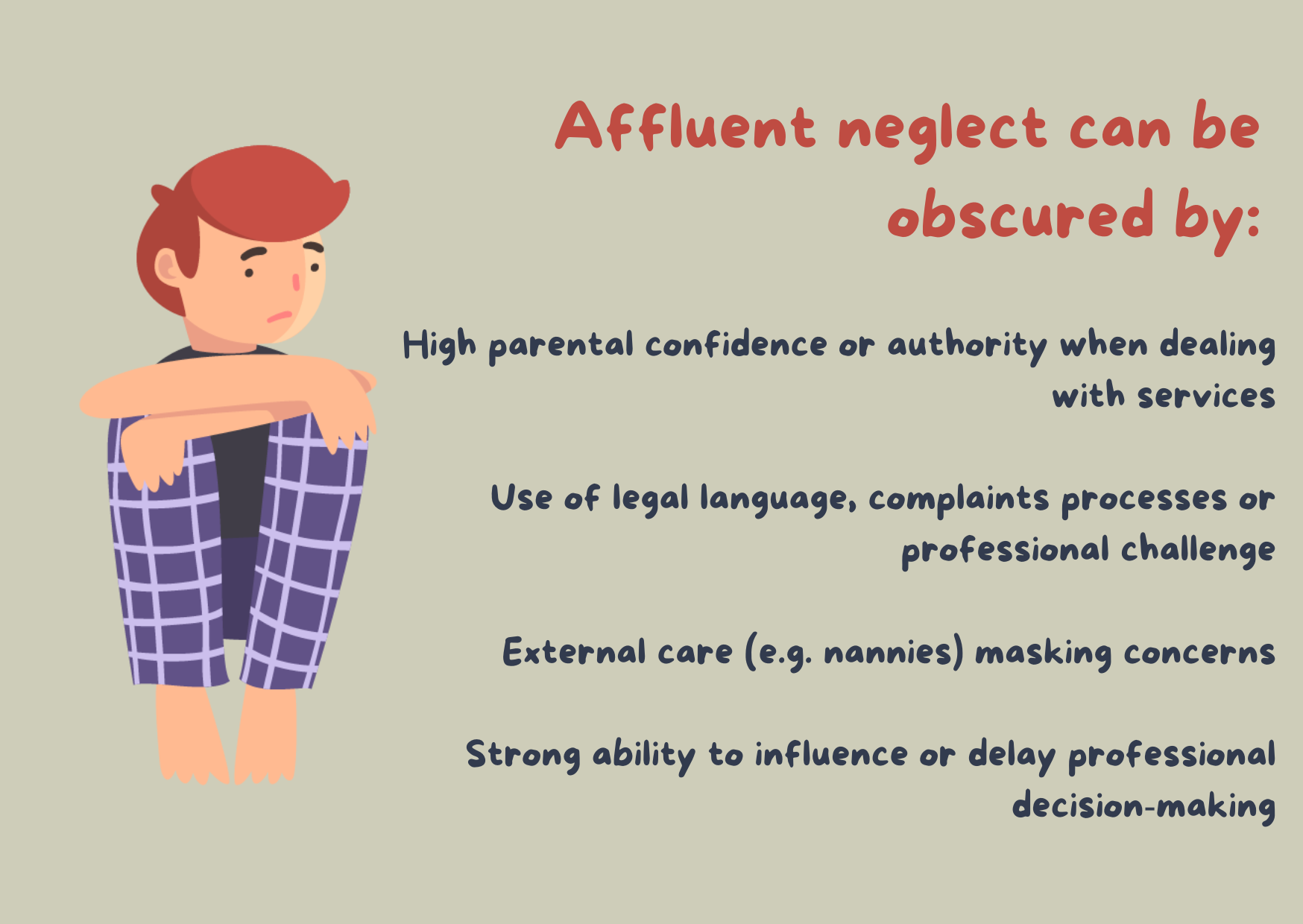
Affluent families may present emotional neglect, hidden substance misuse, and coercive control that is harder to detect. Confirmation bias can and often prevent practitioners from recognising risk.
Understanding why behaviour is happening allows practitioners to respond with empathy and clarity.
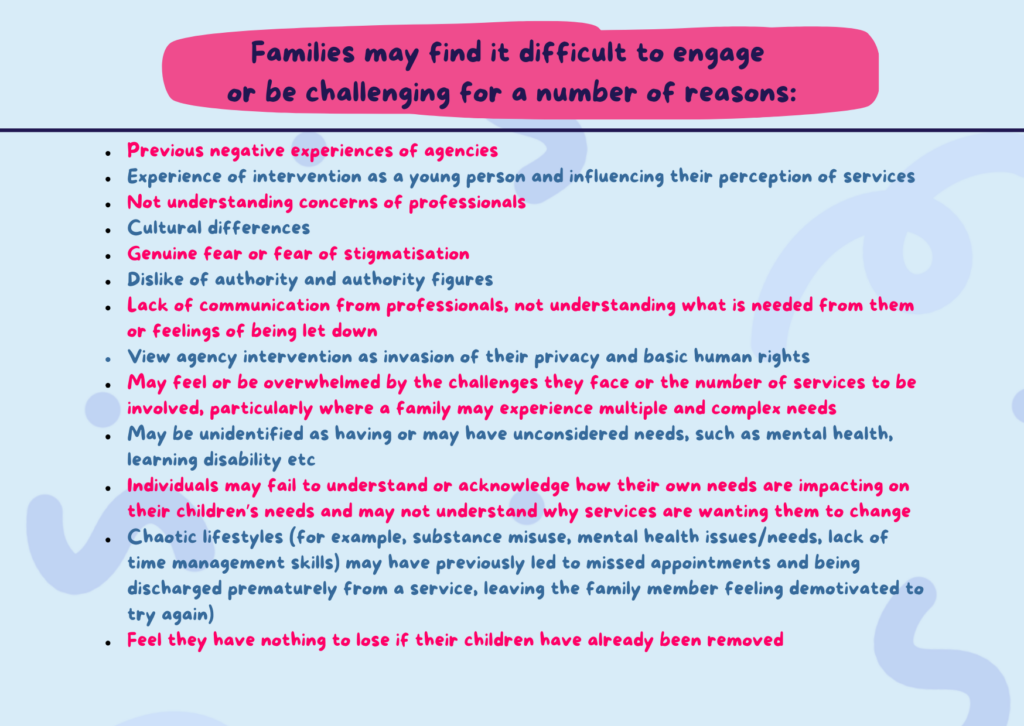
Families may present behaviours that feel challenging, but these often act as protective strategies shaped by trauma or fear.
-
Show details
 Ambivalence Ambivalence may be displayed when a family is consistently late for planned appointments or they always have an excuse for missing a visit or when discussing an uncomfortable topic such as a worker sharing concerns, the subject might be changed.
Ambivalence is a common occurrence and does not necessarily mean it will be difficult to engage with the family. It can occur due to the family being unclear about what is expected of them or from having poor experiences with previous professionals. This situation may take tenacity and time, but investing in building a trusting relationship will pay off in the long run.
-
Show details
 Aggression or Anger Violence, threatened or actual, may only involve a minority of cases but is the most difficult and challenging behaviour to work with. People may have previous experience of getting their way through violence and intimidation.
Often practitioners can face anger responses, remember this is likely to be fear based or trauma related. Try to:Stay regulated and calm
Acknowledge feelings to lower defensiveness
Maintain safe, clear boundaries -
Show details
 Confrontation When a family tends to provoke arguments or show extreme avoidance (e.g. not answering the door) as well as dismissive body language, it is important to understand the barriers they are facing at that moment.
Stay curious and dont take this kind of behaviour personally.
-
Show details
 Disguised compliance Families may give the appearance of cooperating to avoid raising suspicions and to minimise agency engagement and intervention. Some families may deliberately sabotage efforts to bring about change i.e. missed appointments.
Examples include:
Parents/carers agreeing with professionals regarding changes but put little effort into making changes work
Change does occur but as a result of external agencies/resources not the parental/carer efforts
Parents/carers will engage with certain aspects of a plan only
Parents/carers align themselves with certain professionals
Moving/changing addresses, registering with different GP’s, taking children to different A&E departments with non-accidental injuries
Blocking the worker’s way into the home
‘Stage-managing’ visits by restricting workers’ sight of and contact with the child
Using the physical space of the home and objects in rooms such as tables, televisions, dogs/other pets to control where workers or children sit, obscuring views of the child and distracting the worker by stopping them from moving
Using clothing and substances (such as chocolate) to hide injuries
Coaching children to suggest all is well or telling them not to speak to professionals -
Show details
 Manipulation / Controlling or Threatening Behaviour Dealing with families with this kind of behaviour can be intimidating. Stay professionally curious, dont believe everything you are told, triangulate information with other services and family members - sometimes parents may mamipulate services if they do not want you to engage with the other parent. Try to:
Keep boundaries firm and consistent
Stay calm, factual and centred on the child
Re‑focus conversations away from power struggles toward the child’s needsPsychological reactions to child protection matters are very likely as when a person is told they cannot do something, it is likely they will want to do the opposite. And power struggles can often tap into trauma responses.
Defensive parental behaviour may include:
Explaining why you are wrong, and they are right (isolating practitioners to regain power)
Denying everything and making it harder for practitioner to gather evidence
Look for loopholes such as having another baby or reach out to MPs or social media to regain power -
Show details
 Non -engagement Non-engagement does not always mean that families do not want to work with you. There may be many barriers that you are unaware of. Try to:
Explore the emotional reason for disengagement
Break tasks into small, manageable steps (chunking)
Ask what would make engagement easier for them -
Show details
 Stonewalling If a family stonewalls you consider the following approaches
Give time and space
Ask emotion‑focused rather than procedural questions
Offer choices to increase sense of safety and control -
Show details
 Swearing Dont assume that the language you are faced with is automatically agressive. Sometimes this is influenced by cultural or societal norms and can be localised or situational. Remember to:
Recognise cultural, social or learned norms
Focus on the meaning behind words, not the language itself
Affluent Neglect
Working with families where affluent neglect is a concern can create a real challenge for practitioners
Affluent neglect can pose significant dangers for children, even when material needs are met.
For practitioners, the dangers lie in the risk of minimising concerns because a child appears well-cared‑for, high‑achieving, or financially stable. This can lead to missed safeguarding opportunities, difficulty in engaging or connecting with parents who may not recognise, for example, emotional neglect, and challenges in evidencing harm when physical indicators are absent.
Click the link below to find out more about affluent neglect...
Communication
Trauma and its influence on how we interact
People who have experienced trauma may feel they have lost control of part of their life.
It's important to understand how trauma impacts communication, emotional regulation, and a person's ability to safely engage with services.
Some common trauma responses include:
- Fear of enclosed spaces or long appointments
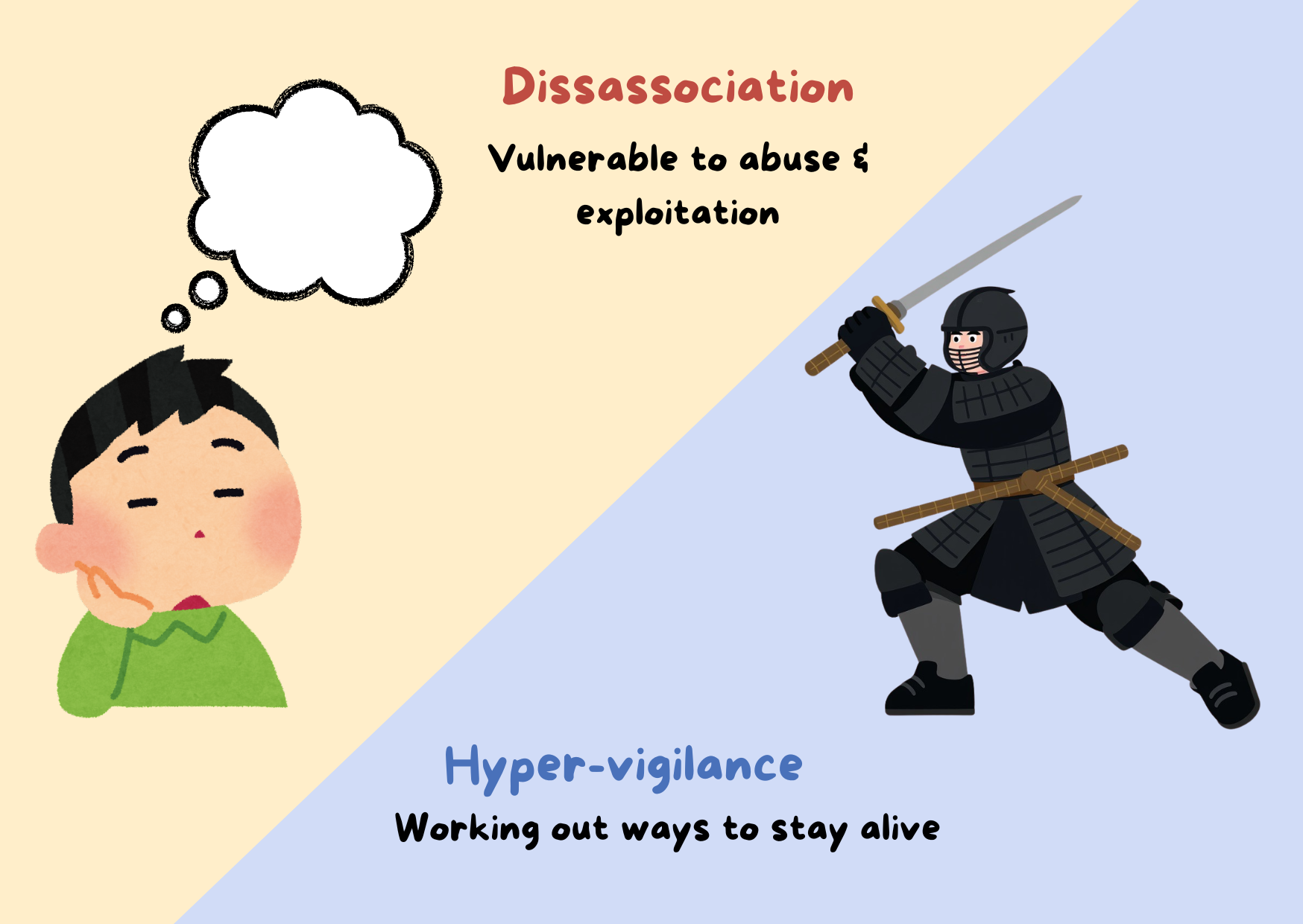
- Hypervigilance or appearing distracted as a truamatised brain can be in a constant state of fight, flight or freeze
- Dissociation or emotional withdrawal due to finding emotional regulation too difficult
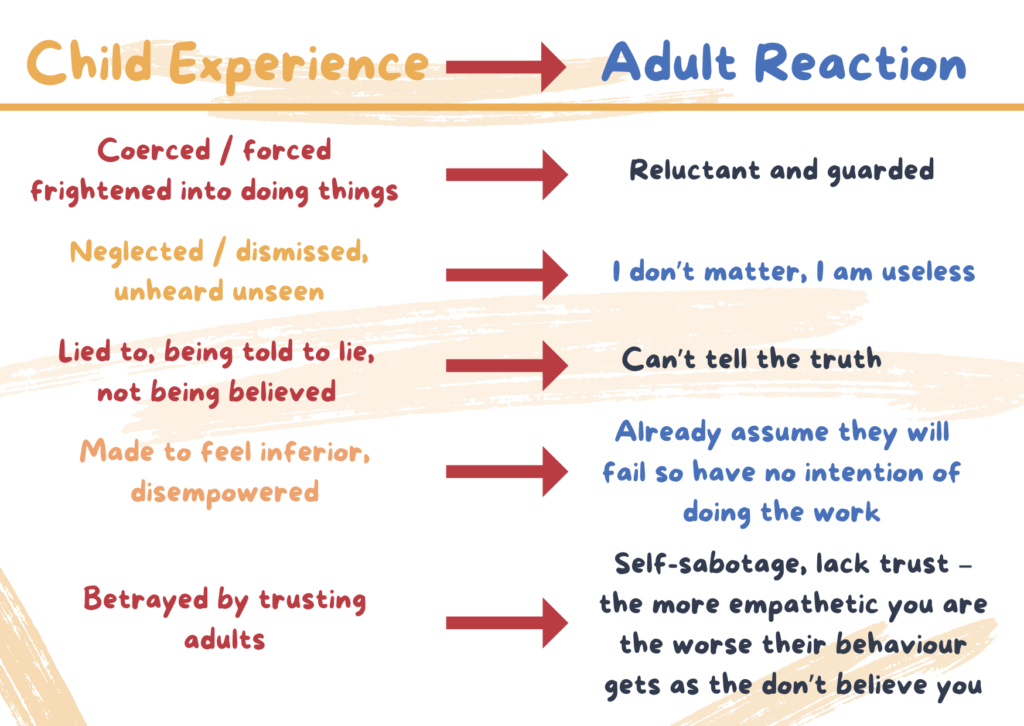
- Difficulty making decisions or trusting others, they may need to test boundaries, avoid getting too close or expect rejection
- Avoidance of meetings or discussions
- Communication difficulties such as expression of feelings or conversely over-sharing to seek reassurance
Understanding trauma responses helps avoid misinterpreting behaviour as 'difficult' or 'non-compliant'. Instead, it is often a survival strategy. Using trauma-informed strategies that help a person feel safe with clear communication can reduce stress and build trust.

-
Trying the following approaches may help you build trusting relationships:Show detailsKey:
Communication Techniques
Knowing what to expect can help you navigate difficult situations
Remember to stay calm and confident. If you are new to role, make sure you have peer or managerial support and:
- Prepare yourself before the conversation
- Adapt communication depending on trauma, education, and family context
- Avoid jargon; explain processes simply and clearly
- Use open questions that prompt reflection
- Stay neutral and compassionate when facing challenge
Stength-based communication
empowers families, builds confidence, and reduces defensiveness by focusing on what is working well. It reinforces partnership rather than judgement.
How to Give a Family a Voice
- Invite them to share their story in their own words
- Ask open questions such as, “Can you tell me what happened from your perspective?”
- Allow silence as some families need time to process
- Validate feelings and experiences, “It makes sense that you’d feel that way”
- Offer choice about how information is shared (written, spoken, or through a support person)
-
What good practice looks likeShow detailsKey:
Trauma and Communication
The Trauma Response in the Brain
When the amygdala activates, the “reptilian brain” perceives threat. This can:
- Limit ability to think logically
- Reduce capacity to engage in conversation
- Trigger fight, flight, or freeze
REMEMBER: In this state, a person cannot meaningfully process information until they feel safe.
What to Do in This Situation
- Slow down the conversation, maintain a low and steady voice and keep your body language neutral (avoid crossing arms or standing over someone)
- Reduce demands or questions
- Offer grounding strategies (breathing, breaks, moving to a quieter space)
- Reassure them, “You’re safe. We can take this at your pace.”
Understanding why behaviour occurs, helps practitioners respond with empathy and clarity, reducing escalation and improving trust.
-
What can it look like?Show detailsKey:
-
Show details
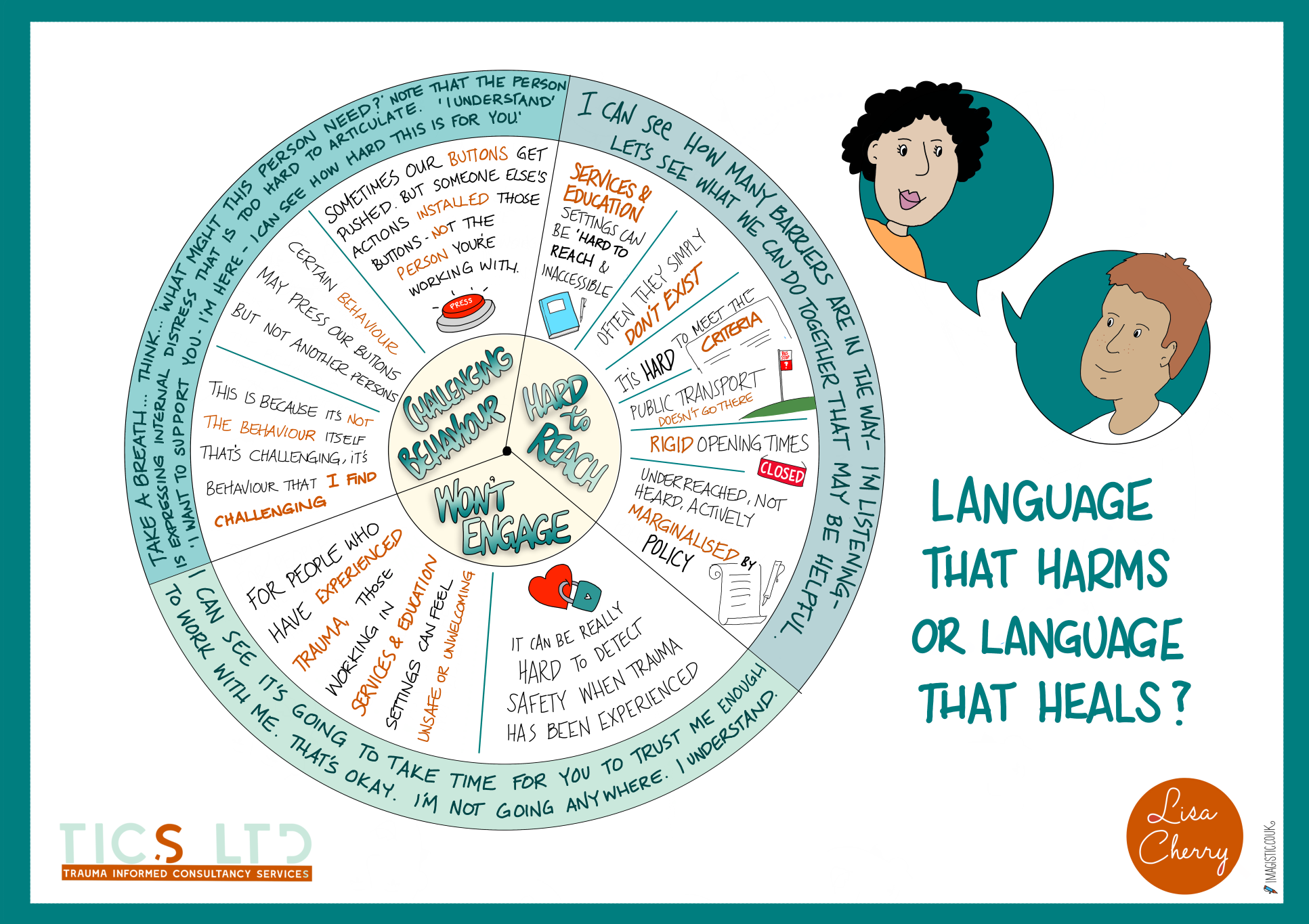
 Language examples Non-stigmatising language examples that help reduce defensiveness, promote collaboration, and recognise families’ abilities rather than their deficits. Strength‑based wording helps reduce labels and shame.
Examples include:Do NOT use the word “But” – use “And” insteaed!
Replace “aggressive” with “frustrated”
Replace “attachment issues” with “relationship difficulties”Replace “Challenging family” to “Mult-Stressed”
Replace “non‑compliant” with “finding it hard to engage right now”
Replace “withdrawn” with “needing space”
Replace “chaotic household” with “household experiencing instability”
Replace “hard‑to‑reach” with “may need a different approachThese alternatives focus on context and need rather than judgement.
-
Show details
 Phrases to calm and empower Knowing what to say to de-escalate situations and empower families is important in developng trusting relationships. Strength‑based, trauma‑informed language helps reduce defensiveness and supports collaboration.
Try saying:“Thank you for being honest with me.”
“What would help this feel easier for you?”“You’re doing your best in a really challenging situation.”
“Let’s work through this together.”
“Would you prefer to pause and come back to this?”
“I can see this is important to you.”These phrases validate feelings, offer choice, and reinforce safety
-
Show details
 Non-verbal awareness Communication isn’t only about what we say, it’s also how we say it.
Remember to slow your speech, acknowledge feelings, and maintain emotional safety.
Look out for:Posture – stay open and relaxed
Tone – calm, steady, and non‑threatening
Pace – allow thinking time; don’t rush
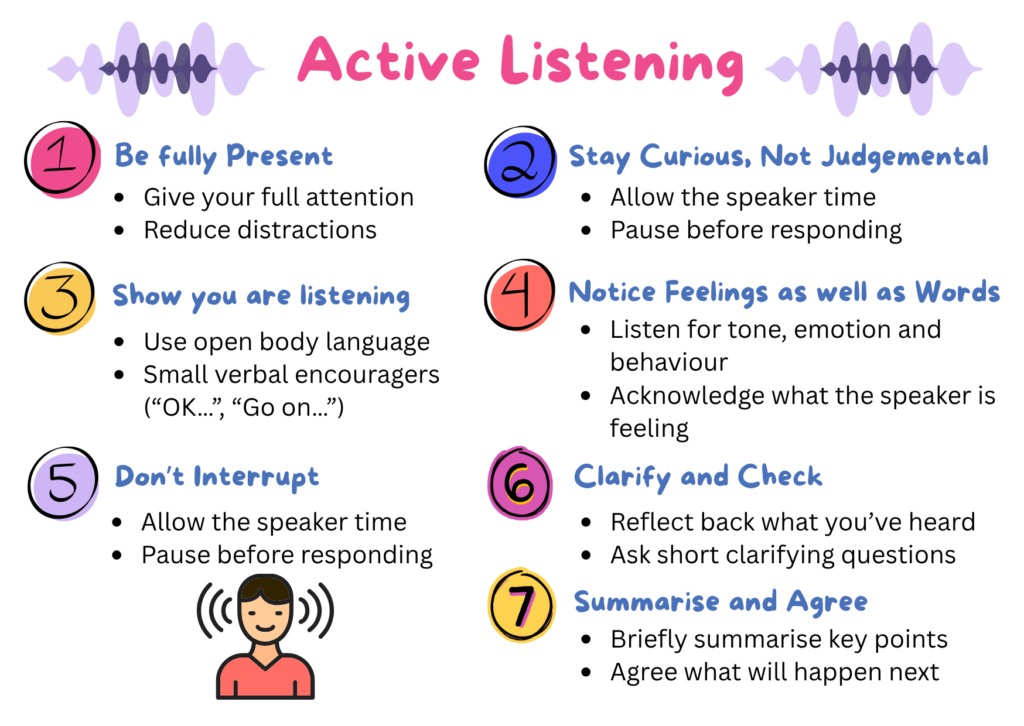
Eye contact – gentle and appropriateUse active listening: reflect back what you hear, show empathy, dont interrupt or correct, maintain eye contact and demonstrate non‑judgement.
-
Show details
 Family dynamics Family dynamics strongly influence how people engage with services. Understanding these patterns helps practitioners navigate conversations safely and effectively.
Couples experiencing conflict may need to be spoken with separately
A calm, neutral environment increases safety and reduces emotional activation
Sometimes one issue must be addressed before another (but child safety always takes precedence)
Power imbalances within family relationships may affect disclosure
Parents may communicate differently when partners or other family members are presentNOTE: A clear understanding of family relationships helps practitioners navigate conversations safely and effectively
-
Show details
 Chunking “Chunking is the process whereby the brain perceives several items of information as a single item.”
(Oram & Wilson, 2010)Chunking means breaking information into small, meaningful, manageable pieces so families can process and retain it more easily. This is especially helpful when trauma is present, as trauma can temporarily affect concentration, working memory, and the ability to sequence information.
Go to resources below to download examples for your practice.
Recognising Bias
It's important to stay non-judgmental
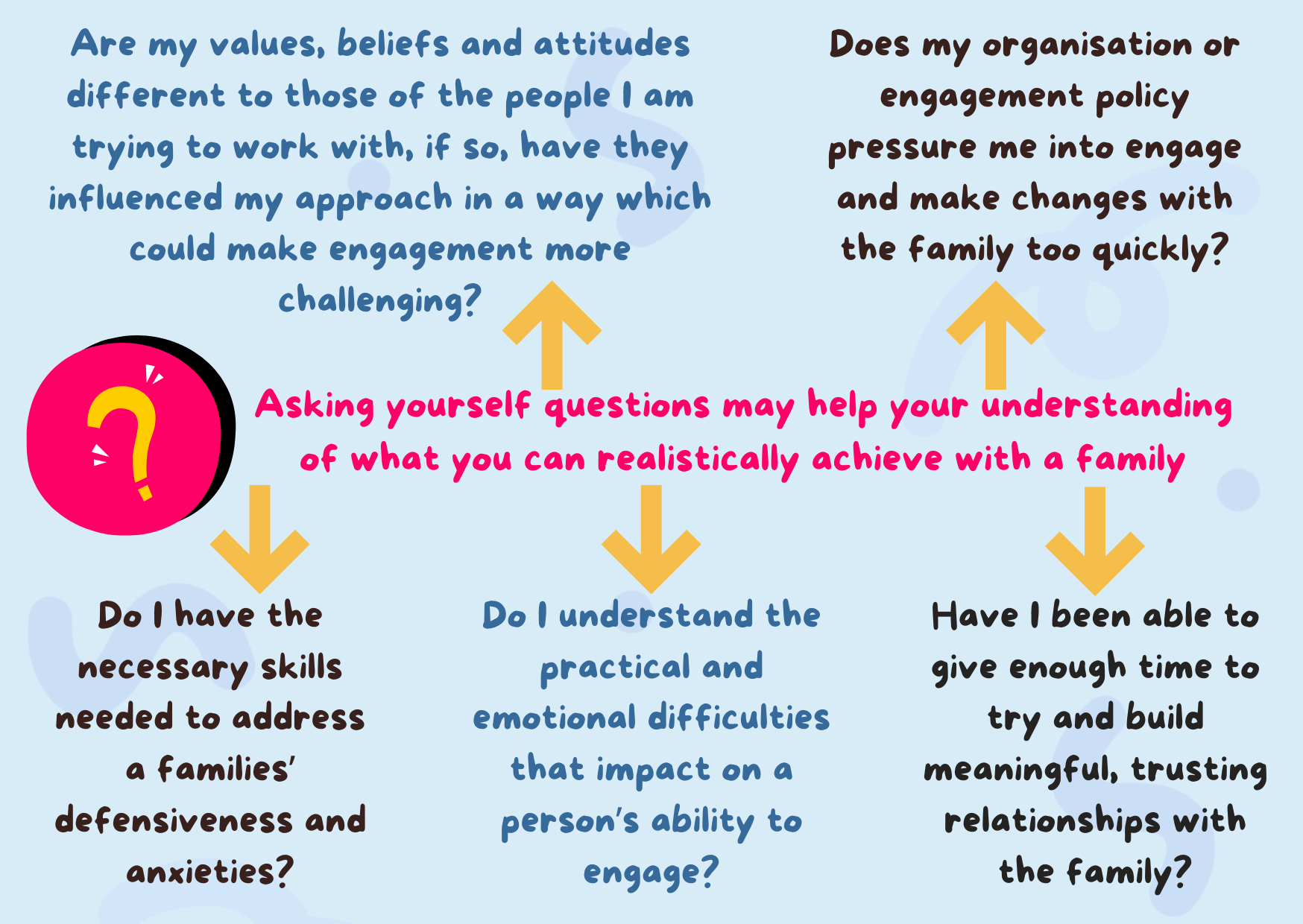
Staying non‑judgmental is essential for safe, effective practice. Practitioners may experience their own triggers when faced with certain behaviours.
Use this section to:
- Understand how bias influences professional decisions.
- Reflect on unconscious bias.
- Explore assumptions based on class, culture, behaviour or reputation.
Motivational Interviewing
Why is it important when working with families?
Motivational Interviewing (MI), isn’t about persuading, it’s about partnering by earning the right to challenge and preparing for difficult questions, such as, “Is it ok if we talk about… what happened at school last week?”.
By using open questions, affirmations, reflective listening, and summarising, you create space for families to explore their own reasons for change. This approach builds trust, reduces defensiveness, and helps uncover what truly matters to them. Even small shifts in language, moving from ‘You need to…’ to ‘What would it take for…?,’ and can transform engagement.
Motivational interviewing uses:
- Open questions
- Affirmations
- Reflective listening
- Summaries
IMPORTANT MI Supports Trauma-Informed Practice: MI uses empathy and curiosity, collaboration and reduces the risk of re-traumatisation.
Top Tips
Other considerations:
- Humanising relationships without judgement will help to reframe challenge
- Sometimes practitioners make mistake because they are working with incomplete information because families will never tell you everything!
- If you are struggling be honest and say, “I am struggling with this case, I might need to ask you more questions about this if that’s ok?”
- Families may ‘stew’ on their meeting with you before / after you arrive so address their concerns by understanding their case
- Stress the importance of two way honesty, “I can only work on the information you give me. I may struggle to get the best needs for you child if I don’t have all the information”
- Remember that in fact most parents are honest!
- If we build a trusting relationship, parents are less likely to lie
- Sometimes in very upsetting situations we are working past the level of humanity which is why if sexual abuse happens, we might need to take an authoritative approach
- Explain why… “The reason I would like to ask you about… is because I wasn’t there and want to hear your side of the story, so you can have a chance to show your perspective”
- Give an exit, “You may not be able to tell me at this moment, and that’s ok, but it may affect how I can help you”
Professional Curiosity
Being curious is important in protecting children from harm. Recognising and acting upon your curiosity can be the differnce between safeguarding a child from harm and missing some vital piece of information.
Being confidence in your approach to safeguarding requires curiosity, creative thinking, an open mind and being non-judgemental.
Curiosity, paired with confidence, can be the difference between identifying risk and missing vital information.
Resources

-
Show details
 Early Help
 -
Show details
 NSPCC Take a look at the NSPCC training page for more guidance on safeguarding children and young people
 -
Show details
 Education Psychology Service Work with children 0-25 years as well as with parents, schools & colleges, early years and other agencies to understand and meet the needs of individuals with early adverse experiences.
 -
Show details
 West Yorkshire Health & Care Partnership & West Yorkshire Violence Reduction Partnership Visit the website for many trauma informed resources and information