Back to main website
Pathways after disclosure
Children may not always tell someone about sexual abuse clearly or all at once.
Knowing how disclosure can happen, how to respond and what to do next can help practitioners feel confident and ensure children receive the right support.

Disclosure can look different
Children may disclose sexual abuse directly, indirectly or gradually.
They may give small pieces of information, initially minimise what has happened, communicate through behaviour or withdraw something they have previously said, with this in mind, it is essential that you stay open and ready to listen.
A disclosure is often a process, not a single event.
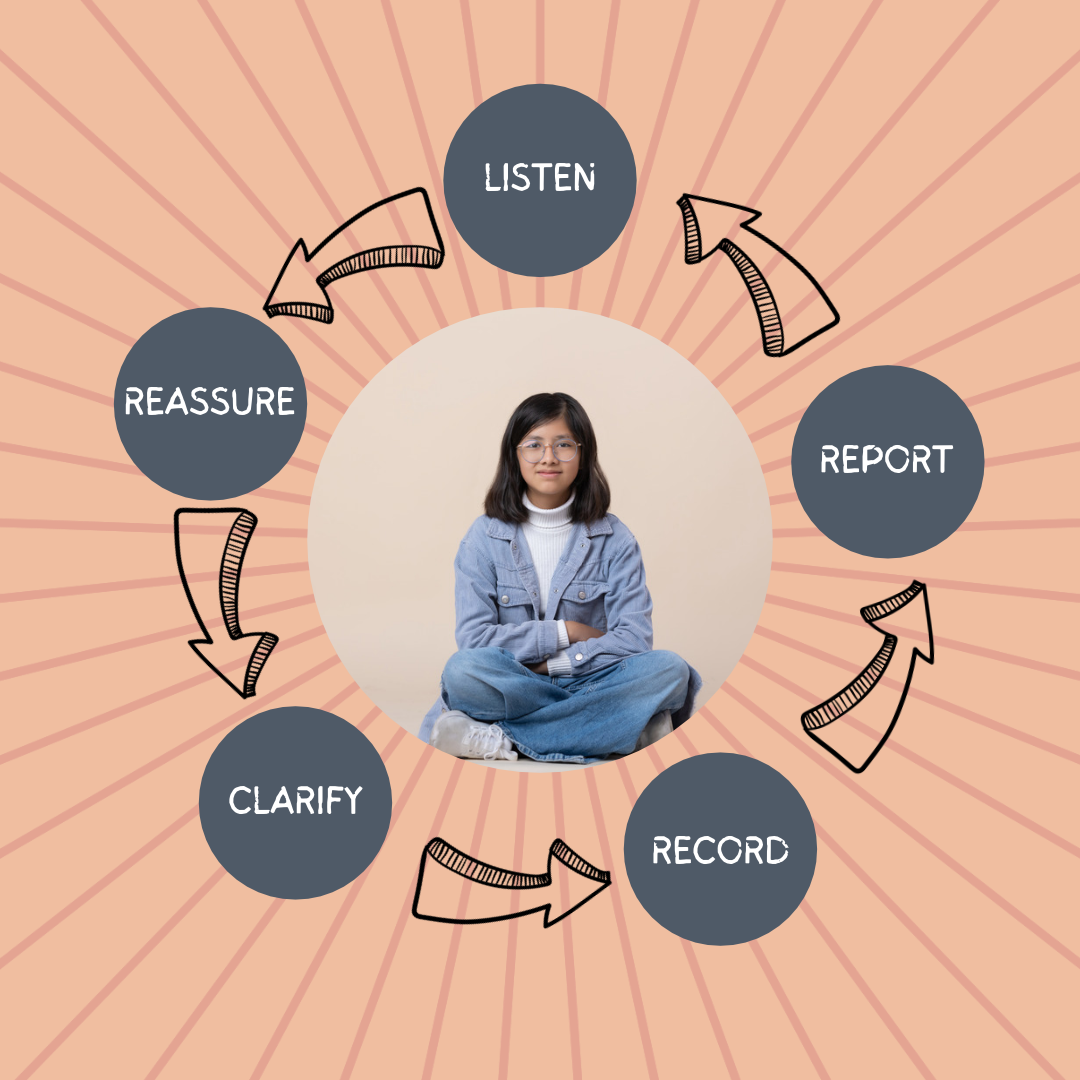
-
Show details
 Listen Give the child time and space to talk at their own pace.
Stay calm and listen carefully, even if what you’re hearing is difficult.
Don’t interrupt, fill in the gaps or make assumptions about what they mean.
-
Show details
 Reassure Acknowledge what they have told you and let them know they have done the right thing by telling you.
Take them seriously and avoid expressing shock, disbelief or judgement.
Be honest about what happens next. Don’t promise to keep what they tell you secret.
-
Show details
 Clarify If you need clarification, use open, non-leading prompts and allow the child to use their own words.
Only ask what you need to understand whether there is a safeguarding concern and any immediate risk.
Don’t investigate, repeatedly question the child or try to establish exactly what happened. That isn’t your role.
-
Show details
 Record Make a record as soon as possible, while the conversation is fresh in your mind.
Record the child’s exact words wherever possible, alongside what you observed and what you said or asked.
Separate fact from opinion and don’t try to interpret what the child meant.
-
Show details
 Report Share the concern with your safeguarding lead or manager without delay.
Consider whether the child or anyone else is at immediate risk of harm and whether urgent action is required.
Don’t delay sharing the concern because you’re unsure which service or pathway is appropriate.
Get safeguarding advice and establish what needs to happen next.
What happens next?
⏬
A child has disclosed sexual abuse or you have concerns that they may have experienced sexual abuse
STEP 1
Is the child or anyone else in immediate danger?

YES - CALL 999
Take any immediate action necessary to safeguard the child.
NO → Move to Step 2
STEP 2
Contact Wakefield Integrated Front Door

Call 0345 8503 503
Tell them that there has been a disclosure or that you have concerns about possible child sexual abuse.
The Integrated Front Door will discuss the concern with you and advise on the next steps, including whether a Multi-Agency Referral Form (MARF) is required. Wakefield Council specifically advises professionals to telephone for consultation before completing a MARF.
Out of hours: use the same telephone number, 0345 8503 503. Calls outside normal business hours are directed to the Emergency Duty Team, which provides an emergency-only service.
STEP 3
The appropriate multi-agency response is agreed

Depending on the circumstances, the response may involve Children's Social Care, Police, health services and/or the West Yorkshire Paediatric SARC.
The West Yorkshire Paediatric SARC is based at the Hazlehurst Centre and supports children following recent and non-recent rape, sexual assault or sexual abuse. hazlehurstcentre.org or call 0330 223 0099 (available 24 hours a day, 365 days a year)
For children aged 15 and under, referral to the SARC is through Police or Social Care. Young people aged 16+ can self-refer.
STEP 4
Continue to support the child

Your role doesn't end when you make the referral.
Continue to provide a safe and supportive relationship.
Keep the child appropriately informed about what will happen next.
Record any further information or concerns.
Continue to respond if the child shares more information.
If concerns remain or increase, seek further safeguarding advice.
Including: when a child tells you, when you have concerns, online sexual abuse, referrals, Children's Social Care, criminal justice and supporting the child.
access this resource
-
A Message from CSAAS (Children's Sexual Abuse Assesment Service)Show detailsalso known to many professionals as the Paediatric SARC (Sexual Assault Referral Centre).
When you are working with a child or young person who has made a disclosure or you have a professional concern that the child or young person has been sexually abused, please ensure to contact Mountain Healthcare Limited (provider of West Yorkshire Paediatric SARC) on 0330 223 0099.
Clinic hours are Monday-Saturday (10-6pm) and Sundays/Bank Holidays (11-4pm). However, we are open 24/7 where a clinician will be available to provide advice.
Please click here to read the full article and to learn more about assessment and referrals to SARC -
SARSAS - Responding to DisclosuresShow details
An introduction to those supporting poeple affected by sexual violence and abuse.
Click here to access this e-learning
Quick links to guide the practitioner
below you will find a list of quick links to help you identify and respond to CSA

-
 CSA Assessment form / screening tool
-
 CSA training To develop
-
 Voice of the child assessment guidance
-
 One Minute Guide to CSA bite sized learning
-
 Reflective practise Professional wellbeing