What Good Engagement Looks Like

“Good engagement with men is intentional, consistent, and purposeful.”

Engaging men effectively is a core part of safeguarding practice, not an optional extra. It requires practitioners to actively identify, include, and work with the men in a child’s life, recognising both risk and potential strengths.

Good engagement is not about doing more, it is about being deliberate in who we engage, how we engage, and how we sustain that engagement over time.
Supporting image

Identifying and Mapping the Men in a Child’s Life

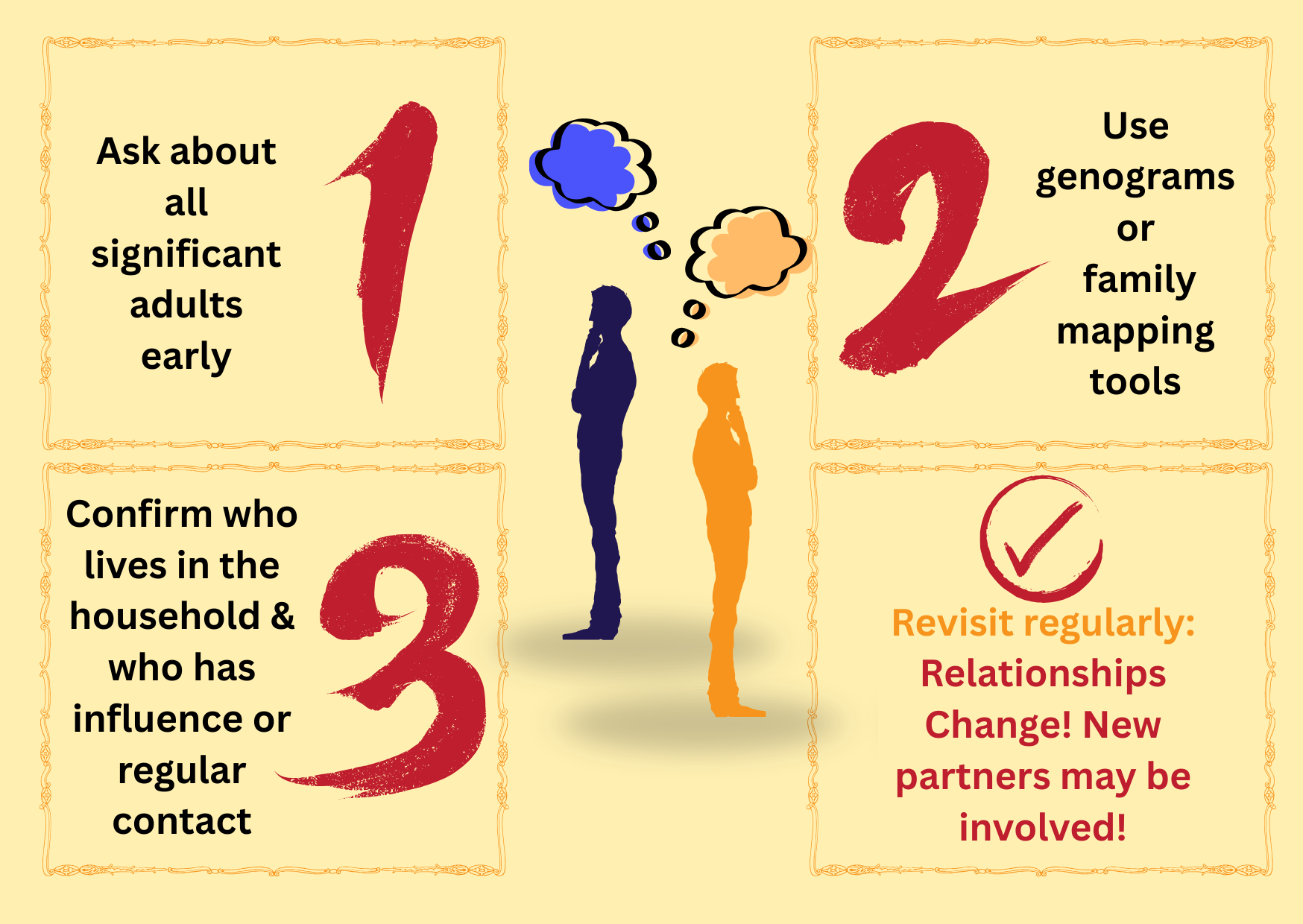
Good engagement starts with knowing who the men are.

Take a look at the image in this section and ask yourself,

“Have I identified all the men in this child’s life, or just the ones who are easiest to see?”

See below for Genogram / Ecomapping templates.
Supporting image

What do we mean by good engagement?

Good engagement goes beyond making contact.

It is about ensuring men are meaningfully included in conversations, assessments, and safeguarding plans.

This means:

  • Understanding their role in the child’s daily life
  • Recognising how they influence both safety and wellbeing
  • Maintaining curiosity without jumping to assumptions
  • Being consistent, even when engagement is challenging

Good engagement is active, intentional, and ongoing.

Supporting image

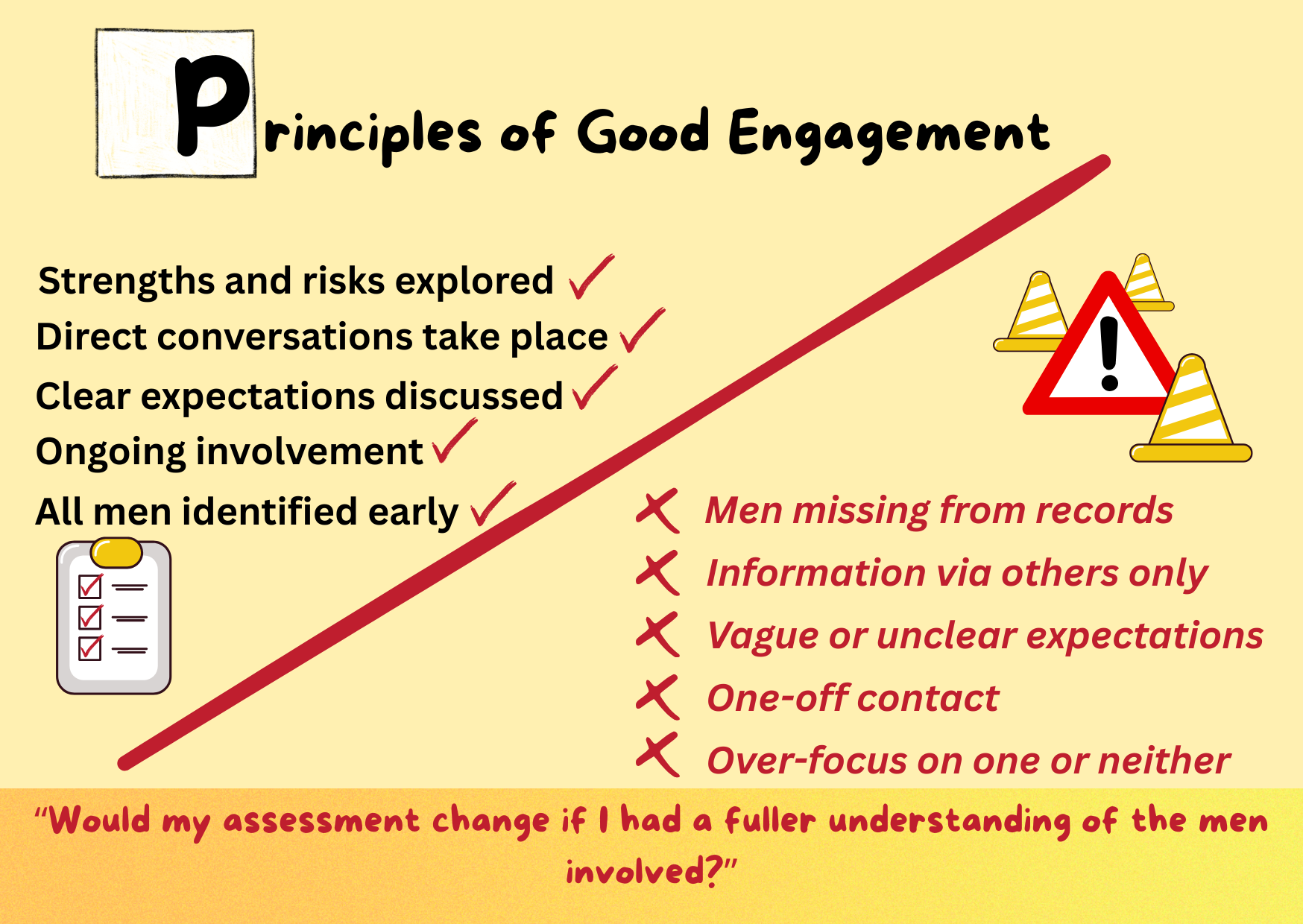
Principles of Good Engagement

  • ✅ Direct, respectful, and transparent communication
  • ✅ Clear expectations about involvement and responsibility
  • ✅ Consistency in approach across professionals
  • ✅ Curiosity without judgement
  • ✅ Strength-based approach while maintaining a focus on risk
  • ✅ Willingness to both support and challenge
Supporting image

What Dads and Men Need from Professionals
  • Men are more likely to engage when they feel recognised, respected, and included.
    Show details
    Key:
    • 1: Direct speaking
    • 3: Respect
    • 2: Clarity
    • 4: Advice
    Dad's need:
    • 1
      To be spoken to directly, not through others.

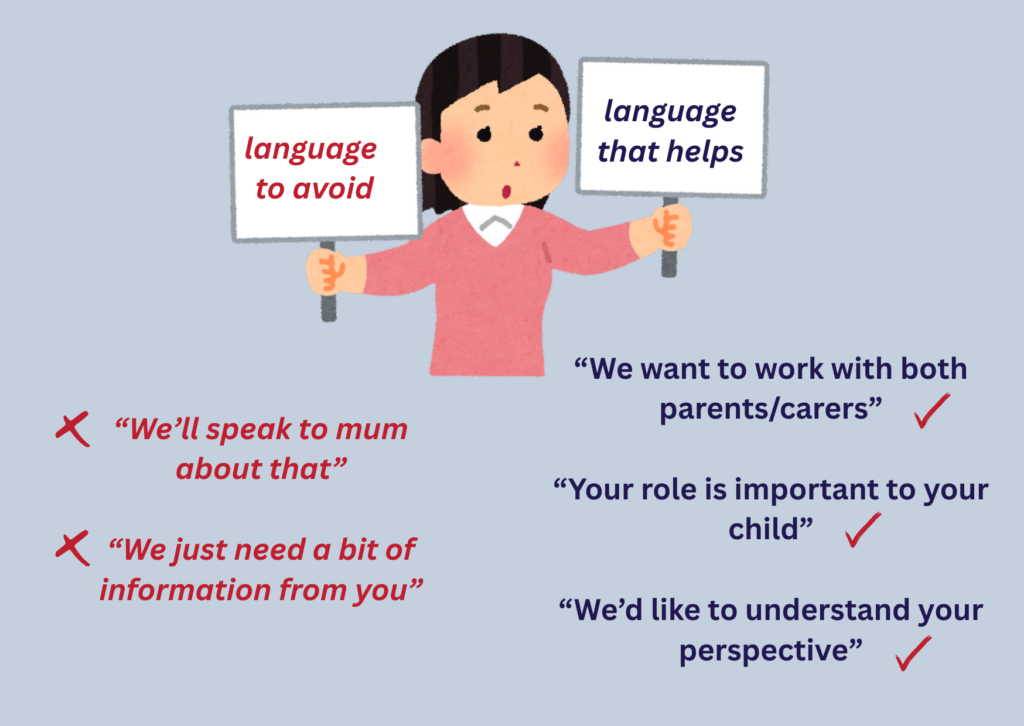
      Many men report feeling like a “secondary parent” in professional conversations, even when they play a significant role in a child’s life. When communication is directed primarily through mothers or other carers, this can reinforce disengagement and reduce accountability.

      Being spoken to directly shows:
      That their role is recognised
      That their involvement matters
      That they are expected to participate
      Direct engagement helps build:
      Clearer understanding
      More accurate assessments
      Greater responsibility for change


      Being included is not just about invitation—it is about active, direct engagement.
    • 2
      Clarity about concerns and expectations

      Unclear or softened messages can create confusion and limit meaningful engagement. Men are more likely to respond positively when professionals are clear, honest, and specific about:
      What the concerns are
      Why they matter
      What needs to change
      What their role is in that change


      Avoiding difficult conversations may feel easier in the moment, but it can lead to:
      Misunderstanding
      Minimisation of risk
      Lack of progress
      Clear communication:
      Builds trust
      Reduces ambiguity
      Supports accountability


      Clarity means transparent, purposeful, and focused on the child.
    • 3
      To be treated with respect and fairness

      Men are more likely to engage when they feel they are being treated fairly and without bias. Some men may come into contact with services expecting to be judged, blamed, or excluded based on previous experiences or perceptions.

      Respectful engagement includes:
      Listening to their perspective
      Avoiding assumptions
      Acknowledging their role in the child’s life


      This does not mean agreeing with everything they say, it means ensuring they are:
      Heard
      Understood
      Held to the same standards as others

      Respectful practice creates the conditions for engagement, but does not remove the need for challenge.
    • 4
      Practical advice, not just assessment

      Men often describe involvement with services as focused on “being assessed” rather than being supported to make changes.

      While assessment is essential, engagement improves when professionals also:
      Offer clear, practical guidance
      Break down expectations into manageable actions
      Support understanding of what “good enough” looks like

      This might include:
      Explaining how to support routines or boundaries
      Giving examples of positive parenting approaches
      Providing clear next steps

      Engagement is strengthened when men are not just told what is wrong but shown what to do differently.

Practical Tips!
  • Text link image Questions to Ask Every Family
    Show details
    Who are the important men in this child’s life?
    Who lives in the household (full or part-time)?
    Who provides care, discipline, or financial support?
    Are there any new or changing relationships?
    How do the adults manage conflict?

Engaging Men Safely - Do & Don’t

Do:

  • Plan engagement carefully where risk is known
  • Be clear about purpose and professional boundaries
  • Work jointly with other professionals where appropriate


⚠️ Don’t:

  • Ignore or avoid high-risk men
  • Collude with avoidance or non-engagement
  • Place other family members at increased risk

⚠️ Reminder:
Engagement should never compromise safety—it should strengthen it.

Resources

Cultural considerations

Gender roles and expectations differ across cultures

Cultural stigma around seeking help

Importance of understanding family dynamics and hierarchy

Avoid assumptions — ask, don’t assume