 Back to main website
Cultural Competence in Engaging Men
Cultural competence is an essential part of effective safeguarding practice, even in areas where populations may appear less diverse.
Culture shapes how men:
- Understand their role within the family
- Communicate with practitioners and agencies
- Respond to support, challenge, and authority
- Experience stigma, particularly around seeking help
Where cultural factors are not considered, there is a risk that men are misunderstood or disengaged, behaviour is misinterpreted and opportunities for engagement are missed.
What Do We Mean by Cultural Competence?
Reflect on the following:
- Cultural competence means recognising and responding to the ways that culture and identity influence family life, while maintaining a clear focus on safeguarding.
- Understanding context is crucial to effective engagement, maintaining a healthy curiosity as well as recognising your own and others bias as a potential barrier.
-
Show details
 Taking time to understand: Family structure and roles
Who holds decision-making power
Expectations of fathers and men -
Show details
 Adapting communication: Using clear, plain language
Checking understanding
Being mindful of tone and approach -
Show details
 Recognising barriers: Stigma around accessing services
Fear or mistrust of professionals
Previous experiences of discrimination -
Show details
 Being aware of differences in: Parenting expectations
Discipline approaches
Gender roles and relationships
Avoiding assumptions
Assumptions, whether based on culture, gender, or appearance can create barriers to meaningful engagement.
Common risks seen in practice:
- Assuming culture explains behaviour without exploring it
- Ignoring culture altogether and applying a “one-size-fits-all” approach
Good practice means asking, not assuming, “What do I know about this family and what am I assuming?”

-
Show details
Have you considered? Gender roles and expectations may differ across cultures
Some men may not see services as relevant to themCultural norms may influence:
Communication styles
Openness about problems
Willingness to engageFamily hierarchy may affect:
Who speaks
Who makes decisions
Who is visible to professionals
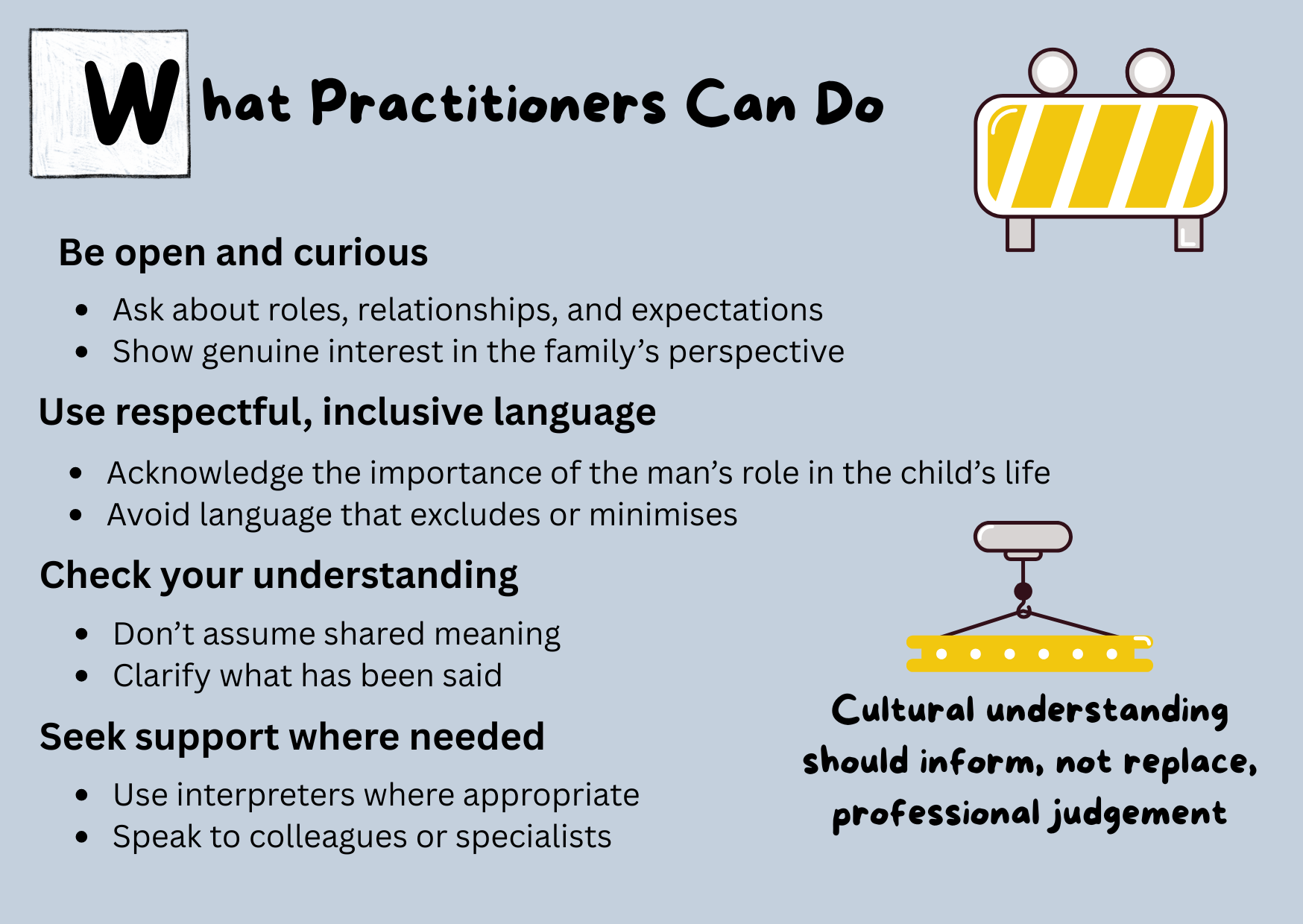
Balancing Cultural Awareness
and Safeguarding
Understanding culture does not mean accepting all behaviours
Practitioners must balance:
- Respect for cultural differences
- Clear safeguarding responsibilities
Where there are concerns:
- Be clear and direct about risk
- Do not avoid difficult conversations
- Ensure the child’s safety remains central
Cultural competence strengthens safeguarding rather than ever diluting it.

Practice Reflection
Asking the following questions will help build relationahips with the men you are working with:
- What do I know about this family’s cultural context?
- Have I asked about roles and expectations, or assumed them?
- How might culture be influencing engagement or non-engagement?
- Am I balancing respect with clear safeguarding focus?