Back to main website
Safety Planning in Education
Sexual abuse or harmful sexual behaviour can have a significant impact on how safe a child feels in their education setting.
A safety plan should help a child feel safe, remain engaged in education and know who will support them.

Start with the child
Things to consider:
Before jumping to restrictions and arrangements, think about what the child needs to feel safe.
- What does the child say they need?
- Are there particular people, places, lessons or times of day where they feel less safe?
- Who are the trusted adults they can go to?
- How will they ask for help if they are worried or overwhelmed?
- Are any reasonable adjustments needed to help them continue learning?

Consider safety throughout the day
Things to consider:
- Arrival & departure Does anything need to change around transport, entrances, collection or leaving the site?
- Lessons & classrooms Do seating, groups, timetables or supervision need considering?
- Unstructured time Think about corridors, toilets, lunch, breaktimes, changing rooms and other less-supervised spaces.
- Online contact Could contact continue through phones, social media, messaging, school systems or devices?
- Triggers & wellbeing Are particular lessons, conversations, locations or situations likely to cause distress?

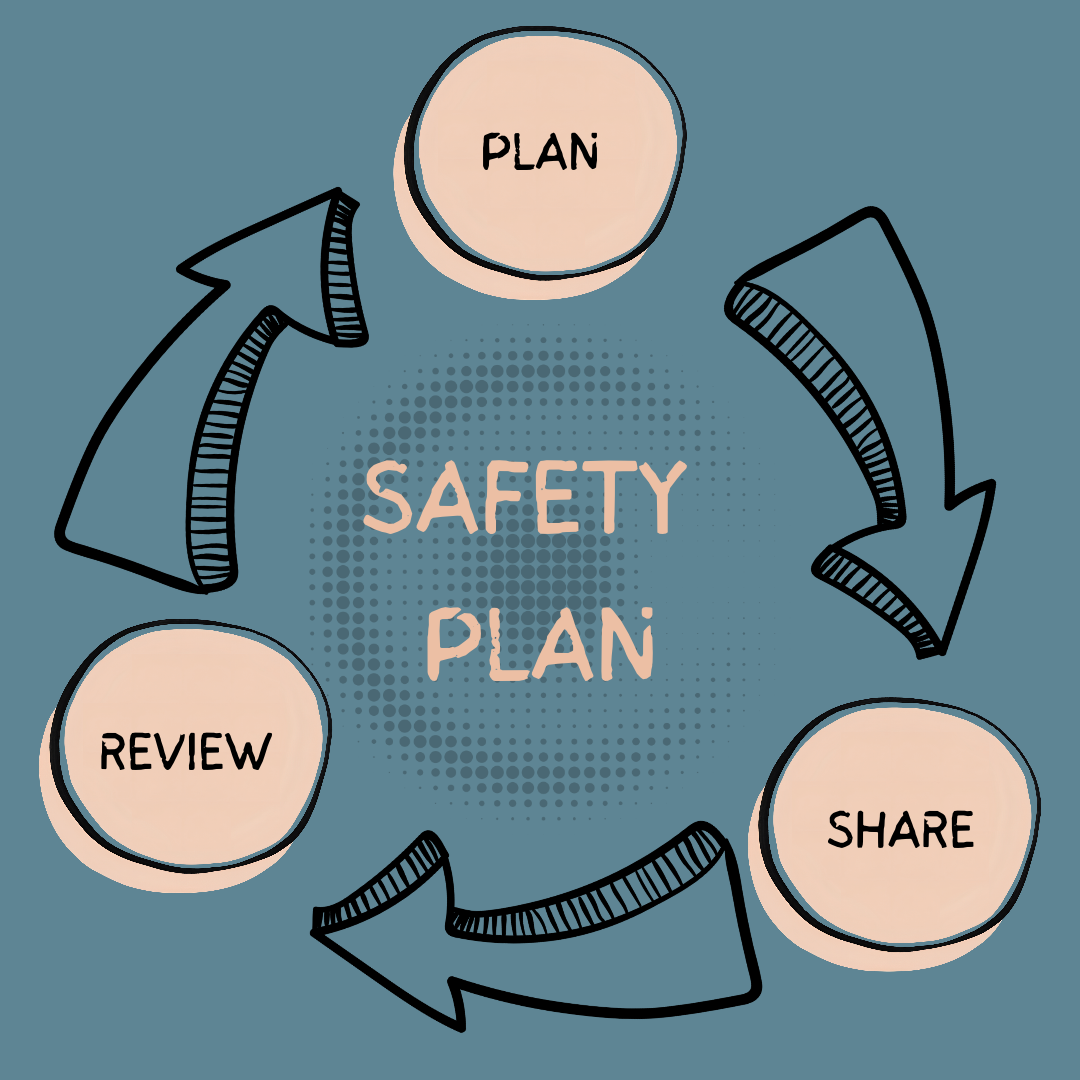
Create and review the safety plan
PLAN
Agree practical arrangements that address the identified risks and the child's individual needs.
SHARE
Make sure the child and the relevant adults know what has been agreed. Information should only be shared with those who need it to safeguard and support the child.
REVIEW
A safety plan shouldn't sit in a file unchanged. Review it when circumstances change and at agreed intervals to check whether it is still working.
Remember ALL children involved
Where the concern involves harmful sexual behaviour between children, safeguarding isn’t about identifying one child as the “victim” who needs support and another as the “problem”.
Every child involved has safeguarding and support needs.
Safety planning should consider the needs, experiences and wellbeing of each child individually, while ensuring arrangements are in place to manage identified risks.
Safety planning should not become punishment!
The aim is to reduce risk, increase safety and support children’s wellbeing and education.
Safety Plan Resources
-
 HARMFUL SEXUAL BEHAVIOUR SAFETY PLAN

Quick links to guide the practitioner
below you will find a list of quick links to help you identify and respond to CSA

-
 CSA Assessment form / screening tool
-
 CSA training To develop
-
 Voice of the child assessment guidance
-
 One Minute Guide to CSA bite sized learning
-
 Reflective practise Professional wellbeing