 Back to main website
Engaging Men to Safeguard Children
This online toolkit has been developed to support practitioners to identify, understand, and meaningfully engage with men in the lives of children in order to strengthen safeguarding practice and improve outcomes for children.
Men play varied and significant roles in children’s lives as fathers, non‑resident parents, partners, relatives, carers, and community figures. When these men are unseen, poorly understood, or excluded from safeguarding processes, risks can be missed, protective factors overlooked, and opportunities for change lost.
This toolkit brings together research, practice wisdom, and safeguarding learning to help professionals engage men confidently, safely, and with appropriate curiosity.

How to navigate through the toolkit
Welcome to the Engaging Men toolkit
This toolkit has been designed to help practitioners who work or volunteer with children and their families. To navigate through the toolkit, you can do so in a variety of ways; either by using the quick links section at the top right of the page and at the bottom centre of the page, or if you prefer to look through all of the toolkit pages, you can click the ‘next’ button at the bottom right of the screen.

-
Show details
 Why This Toolkit Matters Safeguarding children relies on a whole‑family approach. Too often, assessments and interventions focus primarily on mothers or the parent most visible to services. This can lead to:
Incomplete understanding of family dynamics
Over‑reliance on one caregiver’s account
Missed risks posed by unknown or disengaged men
Missed opportunities to support positive male involvement -
Show details
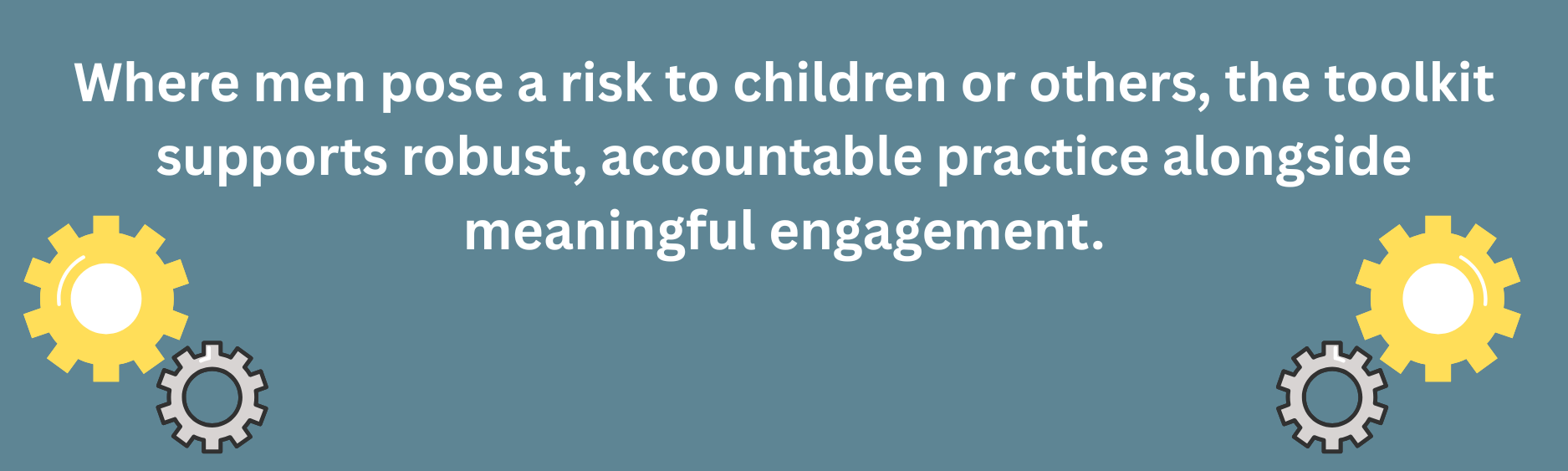
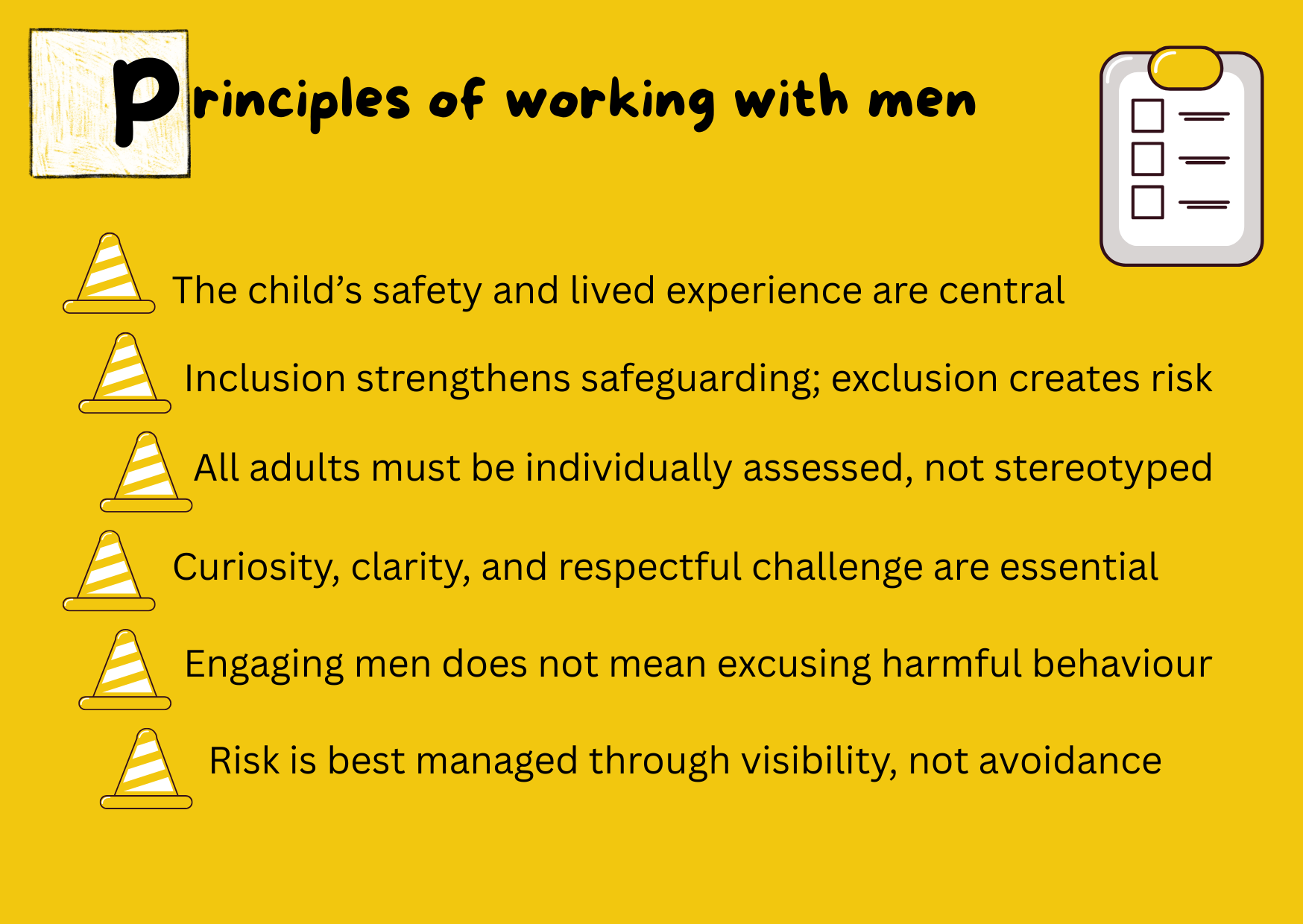
 What it's all about? Engaging men is not about minimising risk or lowering safeguarding standards. It is about:
Making all significant adults visible in assessments
Improving the quality of risk analysis
Reducing blind spots in professional decision‑making
Supporting safer, more informed interventionsMeaningful engagement with men strengthens safeguarding by ensuring no one who matters to a child is ignored.
-
Show details
 Who the Toolkit Is For This toolkit is designed for practitioners and managers across universal, targeted, and specialist services, including
Children’s social care
Health services
Education and early years
Youth justice
Police and probation
Voluntary and community sector organisations
Safeguarding partnershipsIt is relevant for practitioners working with children, parents, carers, and families at all levels of need.
What the Toolkit Covers
Across the different pages, the toolkit explores
- Who the men in a child’s life may be and why they matter
- Why fathers and men are often unseen in safeguarding work
- Cultural, structural, and professional barriers to engagement
- Practical guidance on identifying and involving men
- Safeguarding risks and complex harm
- Domestic abuse, emotional harm, and parental conflict
- What men say they need from professionals
- Case studies and applied learning
- Signposting to support services
Each section can be used independently or as part of a wider learning journey.
How to Use This Toolkit
You can use this toolkit in a range of ways
- Practice reference – dipping into specific sections to support casework
- Supervision and reflection – using prompts and case studies
- Team learning – as part of training or development sessions
- Service improvement – reviewing policies, forms, and assessment processes
The toolkit is not linear. Practitioners are encouraged to navigate between sections and follow the links to related guidance across the site.

Getting Started
Practitioners new to this topic may wish to begin with:
- Defining dads and men in children’s lives
- Why men go unseen
- Identifying the men in a child’s life
Others may prefer to go directly to practice guidance, safeguarding risks, or case studies. All pages are interlinked to support easy navigation.
By making all significant adults visible, we improve our understanding of children’s worlds and our ability to keep them safe!