
 Back to main website
Risk, Harm and Safeguarding
When working with men
Engaging with men in safeguarding is not just about inclusion, it is critical to understanding risk, identifying harm, and protecting children.
Where men are unseen, unheard, or unengaged, safeguarding risks can be significantly missed or underestimated.


Risks
Considerations to explore
Do you have concerns around
- Male caregivers avoiding or refusing to engage with professionals
- Professionals denied access to the full household
- Conflicting accounts between caregivers – are either acting as a gatekeeper?
- Controlling behaviour limiting access to a child or parent
- Child expressing fear of a male figure
- Sudden or unclear changes in household composition
- Men not identified or discussed in assessments
- Reliance on one parent’s narrative
Hidden Harm and Overlooked Risk
Not all safeguarding concerns are immediately visible.
Harm can present in subtle ways, particularly where there is no single incident or where traditional indicators of neglect or abuse are absent.
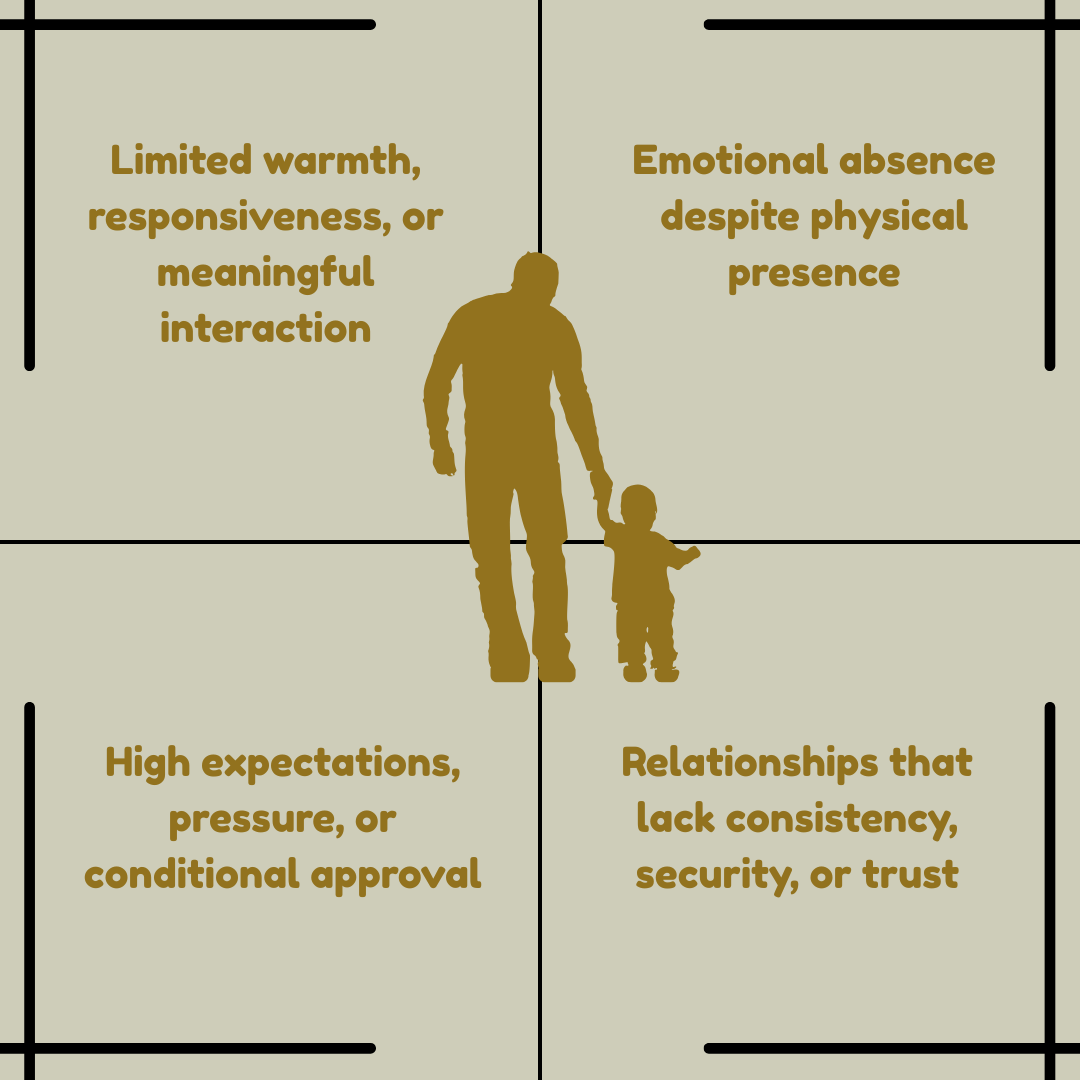
Emotional harm, for example, may occur when male carers are physically present but emotionally unavailable or inconsistent. These dynamics can be harder to recognise but can have a significant impact on a child’s wellbeing and development.
Take a look at the graphic to see what emotional harm may include...
These experiences can affect a child’s sense of safety, self-worth, and attachment, even where no other risks are immediately apparent.
In some families, risk may be obscured by lifestyle or presentation. Material needs may be met, and outward indicators can suggest stability, masking underlying concerns.
This can include:
- Access to resources and opportunities, but unmet emotional needs
- A perception of “low risk” based on professional status or income
- Concerns being minimised due to a family’s presentation
Domestic Abuse, Conflict and Coercive Control
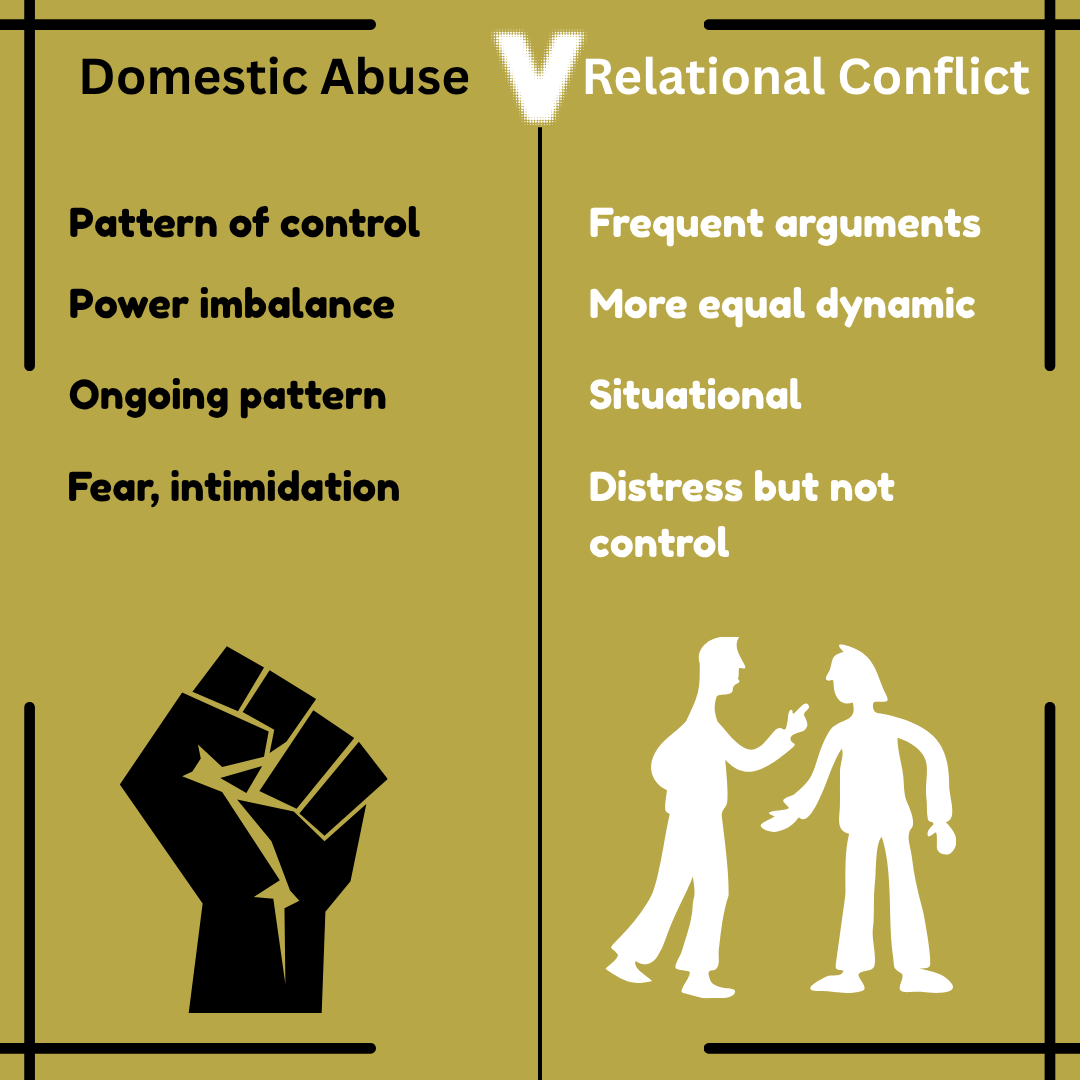
Understanding the difference
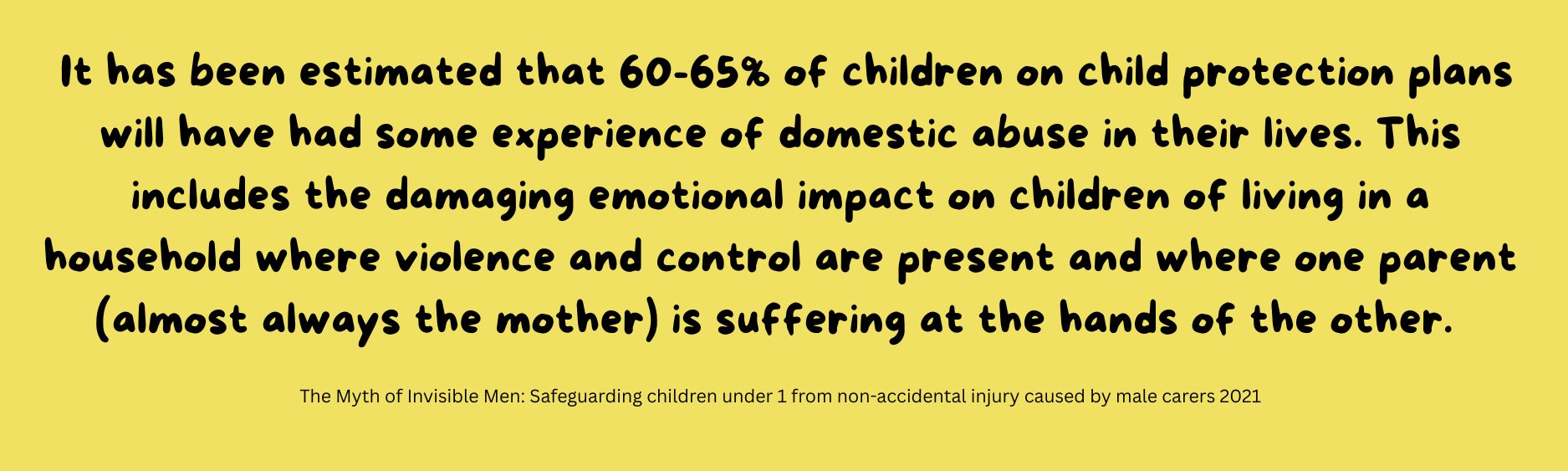
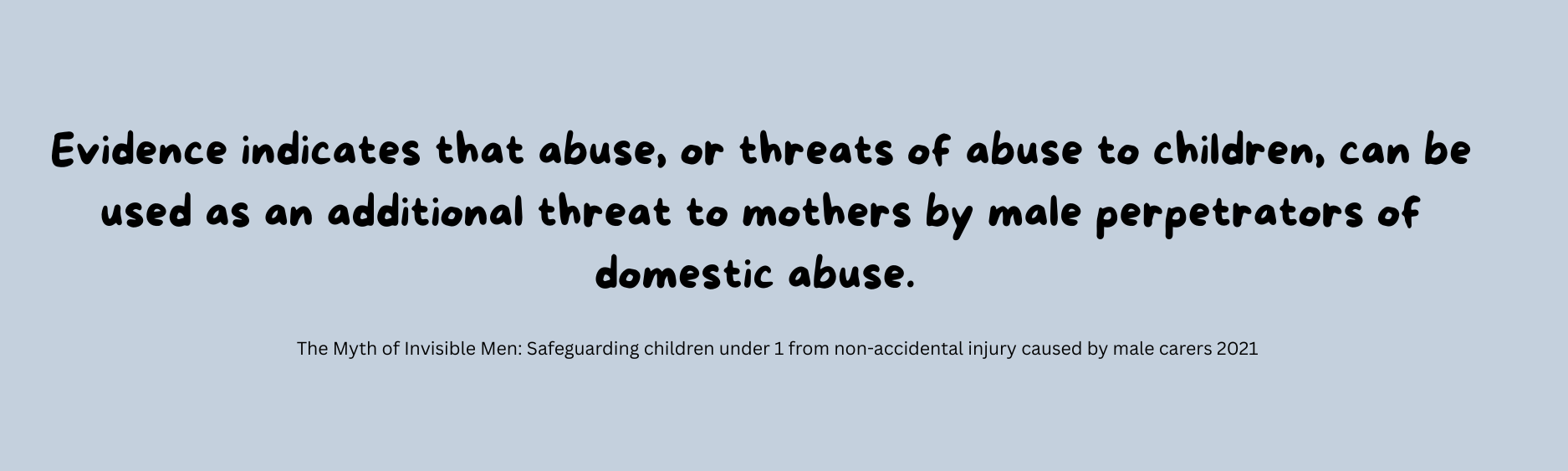
It is important to remember that children are impacted even if they are not the direct target of abuse.
Some of the risk indicators of coercive control indclude:
- Monitoring, jealousy, surveillance
- Isolation from support networks
- Control of daily life
- Escalation during separation
- Use of children within conflict

The Trio of Vulnerabilities
Refers to the co-occurance of:
- Domestic abuse
- Substance misuse
- Mental ill health
These factors frequently feature in serious case reviews and are known to significantly increase the risk of harm to children.

-
Show details
 What is the potential impact? When working with men, the trio of vulnerabilities can:
Interact in ways that increase volatility, unpredictability, and risk
Be minimised, hidden, or presented differently (e.g. anger framed as stress, substance use as coping)
Be linked to patterns of control, coercion, or disengagement -
Show details
 What might this look like? Men may:
Avoid services linked to stigma or fear of consequences
Present with one issue (e.g. housing or mental health) while other risks remain hidden
Be engaged by separate services that are not fully connected -
Show details
 Understanding cumulative impact It is not just the presence of these factors, but how they combine and compound risk:
Domestic abuse + substance use can increase frequency and severity of incidents
Mental ill health + control dynamics can impact decision-making and parenting capacity
Substance use + emotional disengagement can lead to neglect and inconsistency
Key message: Risk is often cumulative. Assessing single issues in isolation can lead to an underestimation of harm.
-
Show details
How to assess risk Practice considerations when assessing risk
Consider whether elements of the toxic trio are present even if not initially disclosed
Explore how these factors interact, not just whether they exist
Ensure information is shared across services
Maintain professional curiosity where engagement is limited or selective -
Show details
 Next Steps.... When you are concerned about a man in a child’s life:
Speak to him directly
Verify information across agencies
Consider cumulative risk (trio of vulnerabilities etc.)
Do not rely on one narrative
Escalate concerns where access is restricted
Engaging Men Safely
When not to engage directly
Engaging men is a key part of effective safeguarding. However, there are situations where direct or immediate engagement may increase risk to the child, another parent, or the practitioner.
In these circumstances, engagement should be carefully planned, supported, and risk-aware, take care not to avoid contact and focus on approaching the situation differently.
-
Practitioners should pause and consider their approach where there is:Show detailsKey:
-
Alternative approachesShow detailsKey:
Escalate where necessary!
Maintain safety for everyone first and escalate:
- If access is restricted
- If risk is not reducing
- If there are barriers to safe engagement
👉 Follow safeguarding procedures and escalate through management systems. Not engaging directly does not mean disengaging completely, it means taking a safer, more coordinated approach.
-
Show details
 Professional Curiosity Safeguarding must focus on the lived experience of the child, not assumptions based on circumstance.
Professionals should remain curious about what life is like for the child day-to-day. This includes exploring the quality of relationships, emotional availability of caregivers, and whether children feel safe, valued, and secure.
Looking beyond what is immediately visible supports a more accurate understanding of risk and helps ensure that hidden harm is not overlooked.
Take a look at the Professional Curiosity & Challenge page for more information
-
Show details
 Affluent Neglect Affluent neglect can be difficult to identify and deal with and can put the child at serious risk of harm. Being aware of the signs and maintaining curiosity is essential in safeguarding practice.
