
 Back to main website
Understanding men in the lives of children
Every man in a child’s life has the potential to be a protective factor or a source of risk. Understanding who they are and how they influence the child is essential for effective safeguarding.
Defining 'Dads'...
...and other men in a child's life
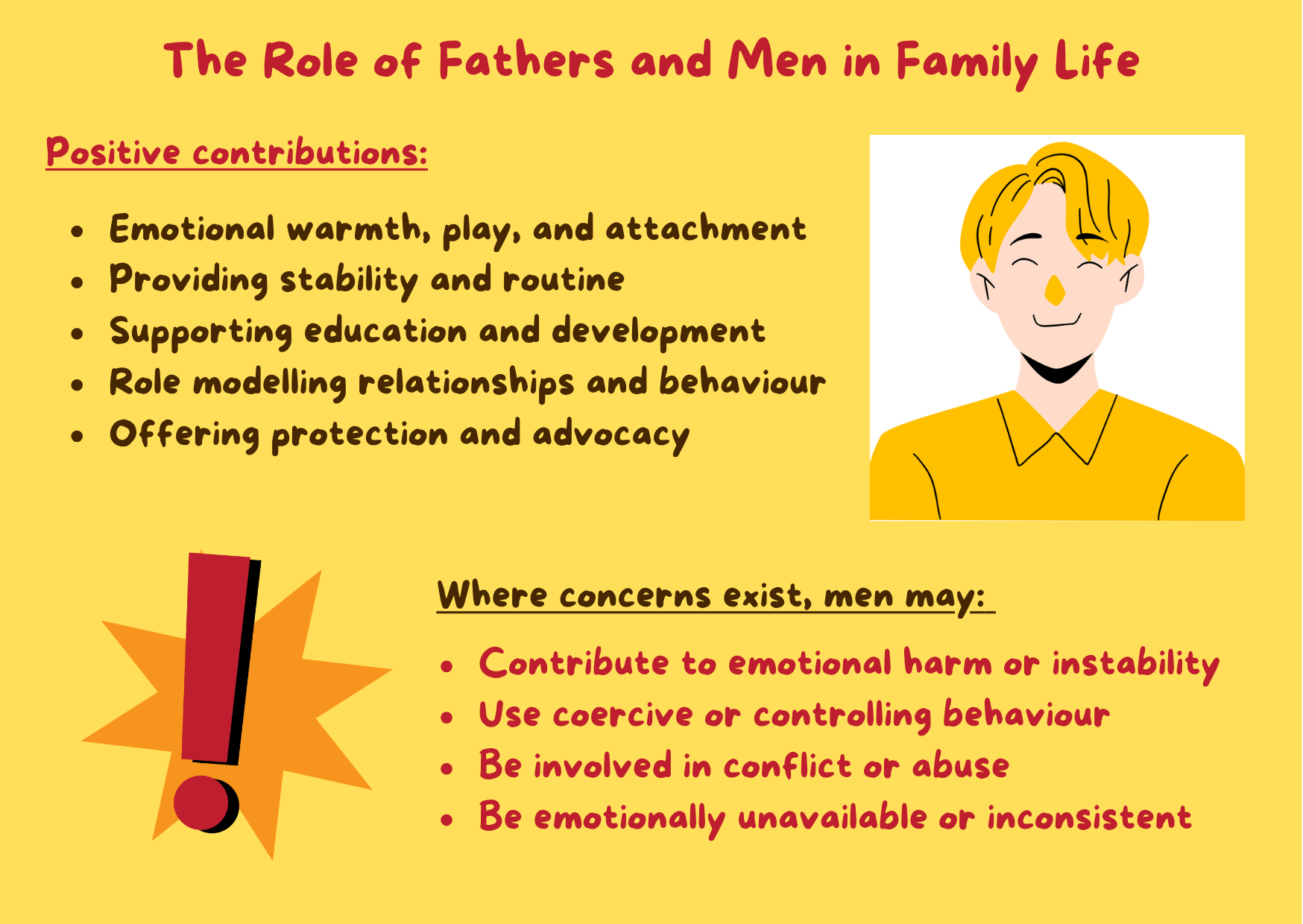
When we talk about “dads,” we are not only referring to biological fathers. Children’s lives are often shaped by a wider network of men who may play significant roles.
These may include:
- Biological fathers (resident or non-resident)
- Step-fathers or mother’s partners
- Male partners in same-sex relationships
- Foster carers or adoptive fathers
- Grandfathers, uncles, or older brothers
- Family friends or other significant adult males
Always ask who is important to the child, rather than assuming family roles based on labels.
Why this matters
- Children can form strong attachments to non-biological men
- Risk may sit with someone not initially identified
- Important support networks may be missed

Understanding Disguised Compliance
and why this is essential in effective safeguarding practice.
Disguised compliance is when someone appears to work with professionals, but this does not result in meaningful or sustained change for the child. Engagement can look positive on the surface, but it may hide ongoing risks or concerns.
Practitioners may see cooperation, agreement, and attendance at appointments. However, this does not always reflect what is happening in the home or in the child’s day-to-day experience.
Disguised compliance may include:
- Saying the “right things” without making lasting changes
- Giving partial or selective information
- Cancelling or rearranging appointments in ways that limit meaningful engagement
- Presenting well in professional settings but behaving differently at home
- Shifting responsibility onto others

This is particularly important
when working with men, who may already be less visible in safeguarding work.
If there is limited direct contact, practitioners may rely on second-hand information, making it harder to fully understand risk. As a result, apparent cooperation can be mistaken for genuine progress.
To respond effectively, practitioners should:
- Maintain professional curiosity
- Look beyond surface-level engagement
- Check information from multiple sources
- Focus on the child’s lived experience, not just adult behaviour
- Record clearly and consistently over time
Key message:
Engagement alone does not equal safety. It is the impact on the child that matters.

Common Myths
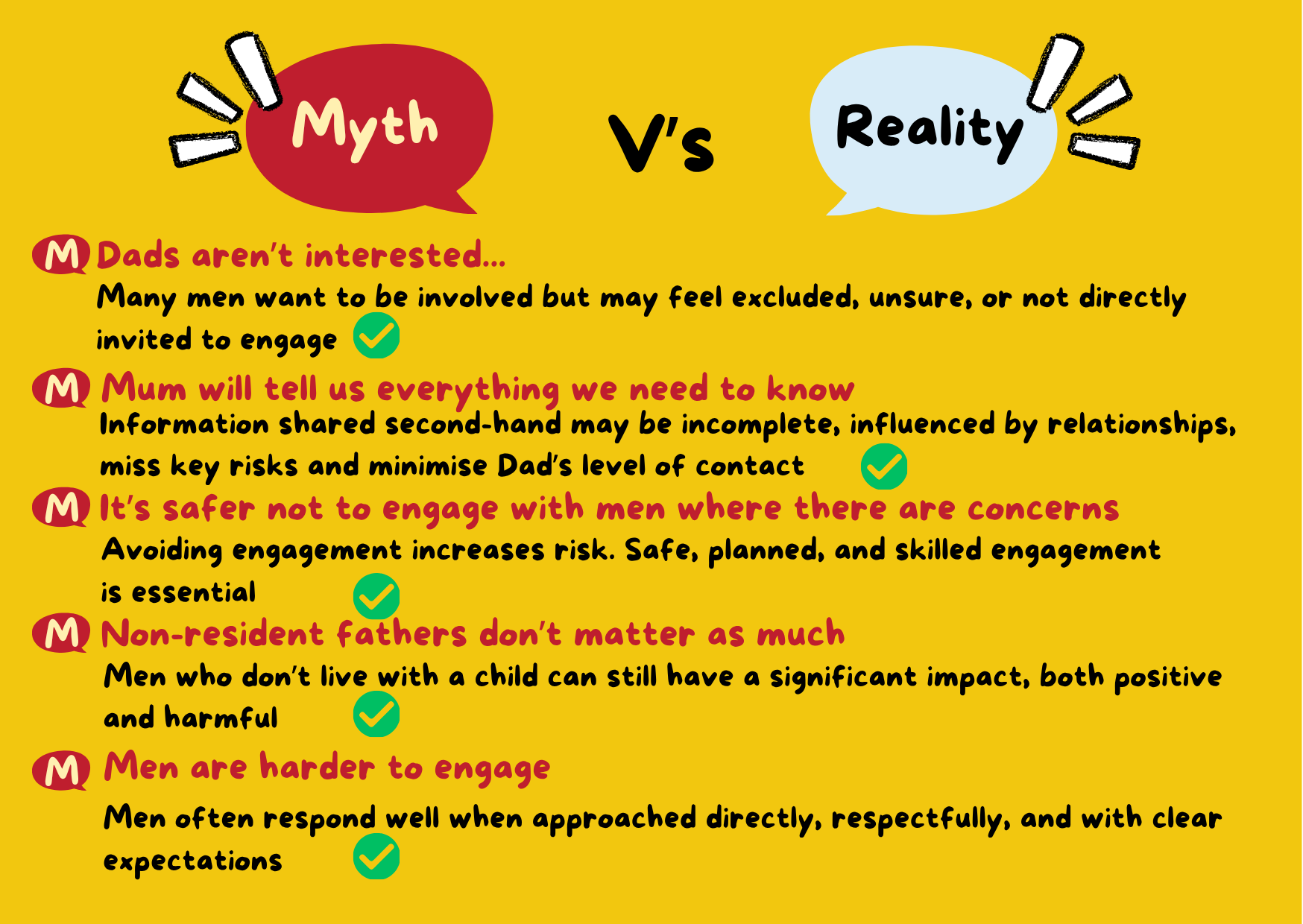
Assumptions about men and fathers can have a significant impact on how practitioners engage, assess risk, and make decisions. Challenging these myths is an important part of improving safeguarding practice and ensuring no one is overlooked.
Below are some common myths and what we know from practice:
Challenging assumptions
myths can lead to:
- Men not being identified or contacted
- Over-reliance on one parent’s account
- Missed risks or support opportunities
- Incomplete assessments
Challenging these assumptions requires practitioners to stay curious, ask direct questions, and ensure all relevant adults are considered as part of the child’s world.
Key message:
Assumptions create blind spots, good safeguarding practice is curious, inclusive, and evidence-based.
These myths can lead to men not being identified or contacted, an over-reliance on one parent’s account, missed risks or support opportunities and incomplete assessments
Challenging these assumptions requires practitioners to stay curious, ask direct questions, and ensure all relevant adults are considered as part of the child’s world.

-
Explore how men are identified, engaged, and understood within safeguardingShow detailsKey:
💡 Supervision tip:
If a man has not been seen or spoken to, this should always prompt further discussion.